
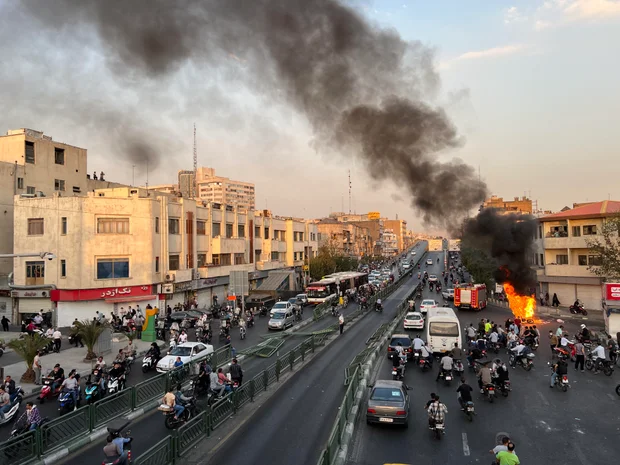
Iran’s ruling establishment is facing its most severe internal test since the 1979 Islamic Revolution, as nationwide unrest collides with mounting external pressure and a state response of unprecedented force. What began as economic anger has evolved into a broader challenge to the political system itself, prompting authorities to unleash a sweeping security crackdown and one of the most extensive internet blackouts the country has ever seen.
In cities that only days ago echoed with chants and gunfire, an uneasy quiet is now settling in. Residents describe streets emptied by fear, with heavy security presence discouraging further gatherings. Journalists inside Iran say the risks of going out have become extreme, while the communications shutdown has plunged the country into near isolation, making independent reporting almost impossible.
This internal upheaval is unfolding against a dangerous external backdrop. U.S. President Donald Trump has repeatedly warned of possible military action, renewing pressure months after American strikes on Iranian nuclear facilities during a brief but damaging war with Israel. While Washington now says Tehran has reached out about resuming talks, the threats remain, and negotiations alone are unlikely to ease the unrest or resolve deep-seated tensions.
Iran’s leadership shows little sign of compromise. Officials have framed the protests as foreign-backed subversion and hardened legal language, branding demonstrators as enemies of the state and invoking the harshest penalties. The government insists it has restored order, even as evidence emerges—through satellite connections and clandestine communications—of overwhelmed hospitals, mounting casualties, and mass arrests on a scale exceeding previous protest waves.
The scale of the violence has shocked even seasoned observers. Human rights groups say the number of deaths has already surpassed totals recorded during months-long protests in recent years, while tens of thousands are believed to have been detained. State media, unusually, has acknowledged fatalities and broadcast images of makeshift mortuaries, underscoring the severity of the crisis.
This wave of unrest began not with ideology but with economics. In late December, a sudden currency collapse triggered strikes among traders selling imported electronics in Tehran’s bazaars. Initial government efforts to calm the situation—promises of dialogue and small cash payments to citizens—failed to keep pace with spiralling prices and widespread frustration. Within weeks, protests had spread from provincial towns to major cities, with demands expanding beyond economic relief to political change.
Iran’s problems run deep: years of sanctions, economic mismanagement, corruption, social restrictions, and the long cost of confrontation with the West have left the country brittle. Yet for now, the system appears to be holding. Analysts note that the decisive factor in any collapse would be a shift within the security forces themselves—something that has not yet occurred.
Power remains concentrated at the top, with Supreme Leader Ayatollah Ali Khamenei, now in his mid-80s, backed by the Islamic Revolutionary Guards Corps, which dominates Iran’s political, economic, and security landscape. Despite internal divisions over strategy, survival of the system remains the unifying priority for Iran’s ruling elite.
Calls for foreign intervention divide both Iranians and the international community. Some opposition figures abroad urge U.S. action, believing it could tip the balance. Others, including prominent activists and cultural figures inside Iran, warn that external military involvement could strengthen hardliners and derail hopes for peaceful change. History suggests both outcomes are possible—and unpredictable.
For ordinary Iranians, the choices are stark. Fear of chaos, economic collapse, and prolonged violence weighs heavily, even among those deeply dissatisfied with clerical rule. Some still hope for reform rather than revolution; others believe the moment for fundamental change has arrived.
As Iran enters another critical week, the direction of events remains uncertain. Whether brute force extinguishes the protests, unrest resurges, or outside intervention reshapes the crisis, the stakes could hardly be higher—for Iran, and for a region already strained by conflict. History shows that when mass anger meets state power, outcomes are rarely orderly, often painful, and never guaranteed.