Health

Health news, medical research, wellness updates, fitness, nutrition, and public health information. Reliable coverage to support informed and healthy living.

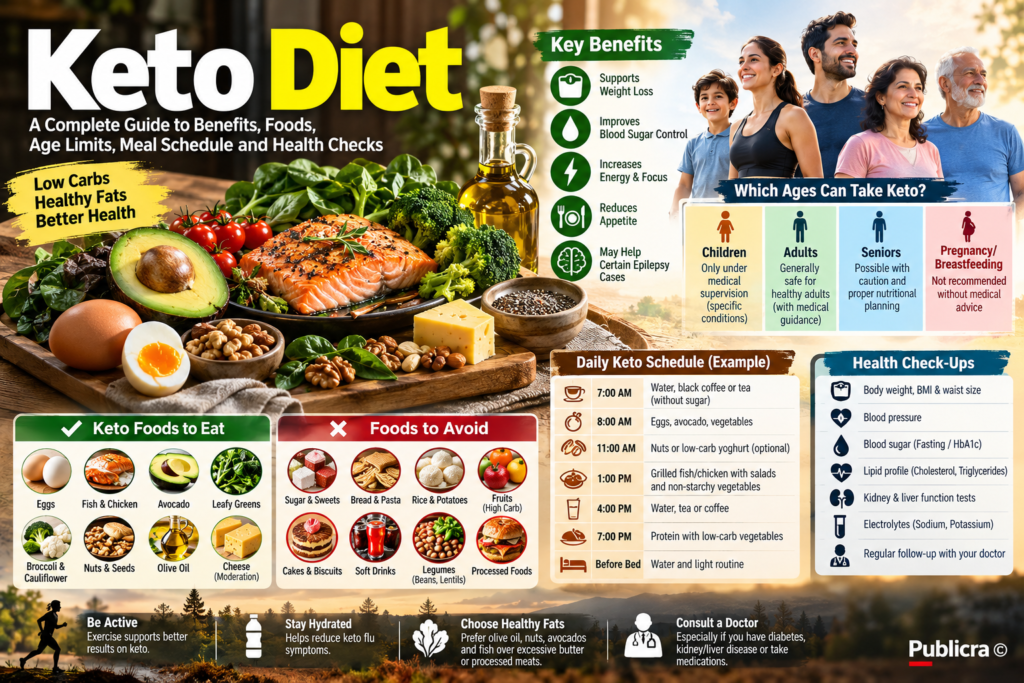
The keto diet, also known as the ketogenic diet, has become one of the world's most discussed low-carbohydrate eating patterns. It is used by some people for weight management and metabolic health, while medically supervised ketogenic diets have a much longer history in the treatment of certain forms of epilepsy. But keto is not simply a diet where people stop eating rice, bread and sugar. A properly planned ketogenic diet substantially reduces carbohydrate intake, provides adequate protein and obtains a large proportion of energy from fat. This metabolic change encourages the body to produce ketones and use more fat-derived fuel instead of relying primarily on glucose. Interest in keto remains high, but medical experts continue to emphasise an important point: the diet is not appropriate for everyone. Age, medications, diabetes, pregnancy, kidney and liver health, cholesterol levels, nutritional requirements and the reason for following the diet all matter. This guide explains the potential benefits and disadvantages of the keto diet, suitable foods, foods to limit, age considerations, a practical daily schedule and the health checks that may be useful before and during the diet. WHAT IS THE KETO DIET? A ketogenic diet is a very-low-carbohydrate, high-fat dietary pattern with adequate protein. Under ordinary circumstances, carbohydrates from foods such as rice, bread, potatoes, fruit and sugar are broken down into glucose, which is an important source of energy. When carbohydrate intake is reduced sufficiently, the body's available glucose supply falls. The liver begins converting fatty acids into substances called ketone bodies. When ketones become an important source of energy, the metabolic state is known as nutritional ketosis. This should not be confused with diabetic ketoacidosis (DKA). Nutritional ketosis from a ketogenic diet and DKA are very different conditions. DKA is a dangerous medical emergency involving excessive ketone production and metabolic acidosis, particularly associated with diabetes. The American Diabetes Association's 2026 Standards of Care highlight that very-low-carbohydrate eating patterns can increase the risk of ketoacidosis in certain people taking SGLT inhibitors. HOW MUCH CARBOHYDRATE IS ALLOWED ON KETO? There is no single carbohydrate target that works for every person. Many ketogenic plans restrict carbohydrate intake to roughly 20–50 grams of net carbohydrate per day, although medically prescribed ketogenic diets can be considerably more structured. The amount required to produce nutritional ketosis differs according to body size, activity, metabolism, health conditions and the particular form of ketogenic diet being followed. For this reason, a person does not necessarily need to copy another person's carbohydrate target. A clinical ketogenic diet used to treat epilepsy can be much stricter than the popular weight-loss version of keto. Johns Hopkins describes its therapeutic paediatric ketogenic diet as very high in fat, with only a very small quantity of carbohydrate and enough protein to support growth. POTENTIAL BENEFITS OF THE KETO DIET One reason keto attracts attention is its potential to produce relatively rapid changes in body weight, particularly during the beginning of the diet. When carbohydrate intake falls, stored glycogen decreases. Because glycogen is stored together with water, some of the early reduction seen on the weighing scale represents water loss rather than body-fat loss. Over a longer period, weight reduction depends on several factors, including total energy intake, appetite, food quality, physical activity, adherence and individual metabolism. Some people report that meals containing protein and fat keep them satisfied for longer and reduce frequent snacking. If this results in a sustained reduction in energy intake, it can support weight loss. Very-low-carbohydrate diets can also change blood glucose and insulin requirements. However, this makes medical supervision particularly important for people taking diabetes medicines because medication doses may need adjustment. One of the best-established medical uses of the ketogenic diet is epilepsy treatment. Johns Hopkins notes that ketogenic dietary therapy has been used for decades for children with seizures, particularly when seizures are not adequately controlled with medication. It should be managed by an experienced medical and dietetic team rather than attempted as a home treatment without professional supervision. KETO IS NOT AUTOMATICALLY A HEART-HEALTHY DIET An important modern discussion about keto concerns the type of fat people eat. A ketogenic diet based heavily on processed meat, butter, cream, large quantities of cheese and other foods rich in saturated fat is nutritionally very different from a low-carbohydrate diet emphasising olive oil, avocado, nuts, seeds, fish and minimally processed foods. The American Heart Association's 2026 dietary guidance continues to recommend choosing unsaturated fats instead of saturated fats, consuming healthy protein sources, minimising added sugars and ultraprocessed foods and eating an overall nutrient-rich dietary pattern. Therefore, simply achieving ketosis should not be the only goal. Food quality still matters. WHICH AGES CAN FOLLOW A KETO DIET? Age alone does not determine whether keto is safe. For a generally healthy adult considering keto for weight management, an assessment of medical history, medications and nutritional needs is more meaningful than choosing an arbitrary minimum or maximum age. Children and adolescents Children should not be placed on a strict ketogenic diet for routine weight loss without professional paediatric and dietetic supervision. Children need adequate energy, protein, vitamins, minerals and other nutrients for normal growth and development. There are specific medical situations where a ketogenic diet may be prescribed for children. The most established example is certain difficult-to-control seizure disorders. In these cases, keto is a medical nutritional therapy, not an internet diet plan. Johns Hopkins explains that children following therapeutic keto require careful meal calculation, monitoring and vitamin and mineral supplementation because the strict diet is not nutritionally balanced by itself. Adults Adults make up the largest group using keto for weight management. A healthy adult may be able to follow a well-planned low-carbohydrate or ketogenic diet, but existing illnesses and medications should be considered first. People with diabetes, kidney disease, liver disease, gallbladder problems, lipid disorders or other chronic medical conditions should discuss major dietary changes with their healthcare professional. Adults over 65 There is no universal age at which keto suddenly becomes prohibited. However, older adults require additional caution because maintaining muscle mass, adequate protein, hydration and overall nutritional intake becomes increasingly important. Older people may also be taking several medicines or living with kidney disease, diabetes, cardiovascular disease or other conditions that can affect the suitability of restrictive diets. A strict ketogenic plan should therefore be individualised rather than automatically recommended to everyone over a particular age. WHO SHOULD GET MEDICAL ADVICE BEFORE STARTING KETO? Medical guidance is particularly important for people with type 1 diabetes, type 2 diabetes requiring medication, kidney or liver disease, a history of pancreatitis or gallbladder disease, pregnancy or breastfeeding, eating disorders, significant lipid abnormalities, or complex chronic medical conditions. Anyone taking medicines that lower blood glucose should also discuss keto with their clinician before dramatically reducing carbohydrate intake. Particular caution is required with SGLT2 inhibitor medicines, which include drugs such as empagliflozin and dapagliflozin. The ADA's 2026 Standards of Care identify very-low-carbohydrate diets, prolonged fasting and dehydration among factors associated with increased DKA risk in people using SGLT inhibitors. Importantly, SGLT2-associated ketoacidosis can sometimes occur without extremely high blood glucose. KETO FOODS: WHAT CAN YOU EAT? A healthier keto approach should prioritise nutrient-dense, minimally processed foods rather than treating the diet as permission to consume unlimited saturated fat. Suitable protein choices can include eggs, fish, chicken, turkey, seafood and unprocessed meat. Vegetarian options can include tofu and other low-carbohydrate protein foods, depending on the individual's carbohydrate target. Fat sources can include extra-virgin olive oil, avocado, olives, nuts and seeds. Low-carbohydrate vegetables are particularly important because an unnecessarily meat-heavy keto diet can lack fibre and micronutrients. Useful vegetables include spinach, lettuce, cucumber, cauliflower, broccoli, cabbage, courgette, mushrooms, asparagus, peppers and other non-starchy vegetables. Full-fat unsweetened yoghurt and cheese may fit some keto plans, although portion size and saturated-fat intake should still be considered. Small portions of berries may also fit into less restrictive versions of keto. Water should remain the main drink. FOODS GENERALLY LIMITED ON A STRICT KETO DIET Foods that can rapidly raise carbohydrate intake include sugar, sweets, cakes, biscuits, sweetened beverages, conventional bread, pasta, noodles, large portions of rice and many breakfast cereals. Potatoes and other starchy foods are usually restricted on strict keto. Fruit deserves more explanation. Fruit contains valuable nutrients, but many fruits also contain enough natural carbohydrate to make strict ketosis difficult when eaten in ordinary portions. Keto plans therefore commonly use smaller portions of lower-carbohydrate fruits such as berries. Legumes and whole grains are also restricted on many ketogenic diets because of their carbohydrate content. This creates one of the important nutritional trade-offs of keto: several foods normally considered part of healthy dietary patterns may be limited simply because they contain carbohydrates. INDIAN AND KERALA FOODS ON KETO Following keto in India can be challenging because many traditional meals are centred around rice, chapati, dosa, idli, appam, puttu or other carbohydrate-rich foods. A Kerala-style keto meal might instead combine fish or chicken with non-starchy vegetables, salad and a carefully chosen fat source. Egg dishes can also work well. Traditional coconut can fit into a low-carbohydrate plan, but it is sensible to vary fat sources rather than depending exclusively on coconut oil, butter or ghee. Using more unsaturated fats from foods such as nuts, seeds, fish and appropriate vegetable oils can help improve the overall nutritional quality of the diet. SAMPLE ONE-DAY KETO SCHEDULE 7:00 AM – After waking Drink water. Tea or coffee without sugar may be used if tolerated. Avoid automatically adding butter or large amounts of cream simply because the diet is called keto. 8:00 AM – Breakfast A vegetable omelette made with eggs, spinach, mushrooms and a modest amount of cheese can provide protein, fat and micronutrients. Avocado or a small portion of nuts can be added depending on energy requirements. 11:00 AM – Optional snack If genuinely hungry, consider a small portion of nuts, a boiled egg or unsweetened low-carbohydrate yoghurt. Snacks are not compulsory if breakfast keeps you satisfied. 1:00 PM – Lunch Choose grilled fish, chicken or another protein source with a generous serving of non-starchy vegetables and salad. Olive oil can be used as a dressing. 4:00 PM – Hydration Drink water. Unsweetened tea or coffee can be included if desired. Hydration deserves particular attention during the first stages of carbohydrate restriction. 7:00 PM – Dinner A meal could include fish, chicken, eggs or tofu with cauliflower, broccoli, cabbage, courgette or another low-carbohydrate vegetable. Before bed Avoid making late-night processed keto snacks a routine. Water can be taken according to thirst and individual medical requirements. This schedule is an example rather than a prescription. Calorie, protein, carbohydrate, fluid and electrolyte requirements vary substantially between individuals. DOES KETO MEAN UNLIMITED MEAT, CHEESE AND BUTTER? No. This is one of the biggest misunderstandings surrounding keto. A person can technically keep carbohydrate intake low while consuming large quantities of processed meat, butter and cheese. That does not automatically make the resulting diet healthy. The 2026 American Heart Association guidance favours unsaturated fats over saturated fats and emphasises vegetables, healthy protein sources and minimally processed foods. A more health-conscious ketogenic pattern therefore focuses on food quality as well as carbohydrate quantity. MEDICAL CHECK-UPS BEFORE STARTING KETO Someone planning a major long-term dietary change can discuss baseline health measurements with a doctor or qualified dietitian. Depending on age, medical history, medicines and risk factors, a clinician may consider measurements such as: Body measurements: body weight, BMI and waist circumference. Blood pressure: particularly for people with hypertension or cardiovascular risk. Blood glucose assessment: fasting glucose and/or HbA1c when clinically appropriate. Lipid profile: total cholesterol, LDL cholesterol, HDL cholesterol and triglycerides. Kidney assessment: creatinine and estimated glomerular filtration rate, with additional testing when indicated. Liver assessment: liver-function tests when clinically appropriate. Electrolytes: sodium, potassium and other tests depending on health status and medications. Additional tests may be needed for a particular individual, but there is no universal laboratory package that every healthy person must undergo simply because they want to reduce carbohydrates. FOLLOW-UP AFTER STARTING KETO Follow-up is particularly useful when keto is being used for months rather than days. Weight, waist measurement and blood pressure can be monitored periodically. People with diabetes may require considerably closer glucose monitoring, especially when medications are being used. A clinician may repeat lipid, kidney, liver or glucose-related tests after an appropriate interval based on the person's baseline results and medical history. If LDL cholesterol rises substantially, persistent gastrointestinal problems develop, kidney function changes or glucose control becomes problematic, the dietary plan should be reassessed. The purpose of follow-up is not merely to see whether body weight has decreased. A diet should support overall health, not simply produce a lower number on the weighing scale. WHAT IS “KETO FLU”? Some people experience unpleasant symptoms when they sharply reduce carbohydrate intake. These may include headache, fatigue, weakness, irritability, dizziness, difficulty concentrating or constipation. This collection of symptoms is often informally called “keto flu,” although it is not influenza and is not caused by a virus. Changes in fluid balance, dietary intake and adaptation to carbohydrate restriction may contribute. Adequate hydration, sufficient nutrition and avoiding unnecessarily extreme restriction may help. Persistent, severe or worsening symptoms should not simply be dismissed as keto flu. CONSTIPATION AND DIGESTIVE PROBLEMS Constipation can occur when people remove bread, grains, fruit and legumes but fail to replace their usual fibre intake with suitable vegetables, nuts and seeds. A better-planned keto diet should include adequate low-carbohydrate vegetables and other appropriate fibre sources. Persistent vomiting, severe abdominal pain, marked weakness or inability to maintain fluids requires medical assessment rather than dietary experimentation. KETO AND CHOLESTEROL The effect of keto on blood lipids varies between individuals. Triglycerides may improve in some people during carbohydrate restriction and weight loss, but LDL cholesterol can rise considerably in certain individuals. This is another reason why the type of dietary fat matters. Replacing some saturated-fat sources with unsaturated-fat sources is consistent with current American Heart Association cardiovascular guidance. People with known cardiovascular disease, familial cholesterol disorders or markedly elevated LDL cholesterol should not ignore their lipid results simply because their weight is decreasing. KETO AND DIABETES NEED SPECIAL ATTENTION Keto should never be treated casually in someone taking diabetes medication. Reducing carbohydrates can alter blood glucose rapidly. Insulin or other glucose-lowering medication may need adjustment under professional guidance. The distinction between nutritional ketosis and diabetic ketoacidosis is especially important. DKA is potentially life-threatening. Symptoms can include nausea, vomiting, abdominal pain, dehydration, rapid or deep breathing, weakness and altered mental status. People at risk should follow their diabetes team's instructions regarding glucose and ketone monitoring. Current ADA guidance particularly highlights ketoacidosis risk in susceptible people taking SGLT inhibitors during carbohydrate restriction, fasting, illness or dehydration. HOW LONG SHOULD SOMEONE FOLLOW KETO? There is no scientifically established single duration that is correct for everybody. Some people use a ketogenic approach temporarily for weight loss before moving to a less restrictive eating pattern. Others follow a low-carbohydrate lifestyle for longer periods. Therapeutic ketogenic diets for epilepsy follow a different clinical pathway. Johns Hopkins notes that many children treated for seizures remain on the diet for around two years before it is gradually changed, although treatment duration varies. For weight management, long-term success depends less on achieving the highest possible ketone level and more on whether the eating pattern is nutritionally adequate, medically safe and sustainable. IS KETO BETTER THAN EVERY OTHER DIET? There is no single diet that is best for every person. Keto can be an effective strategy for some people, particularly when it helps them control appetite and maintain a lower energy intake. Other people find Mediterranean-style, moderate-carbohydrate or other balanced dietary patterns much easier to maintain. Sustainability matters because repeatedly losing weight on a highly restrictive diet and regaining it after abandoning the diet may not produce the desired long-term result. The American Heart Association's current dietary guidance continues to emphasise overall dietary quality across the lifespan rather than focusing on one macronutrient alone. THE BOTTOM LINE The keto diet can be useful in specific situations, but it is not a universal solution for weight loss or better health. A properly designed ketogenic diet should provide adequate protein, vegetables, micronutrients and appropriate sources of fat while substantially restricting carbohydrates. Adults considering keto should take their health history and medications into account. Children should not be placed on strict keto casually; therapeutic ketogenic diets for paediatric epilepsy require specialist supervision. Older adults need particular attention to nutrition, hydration and preservation of muscle mass. People with diabetes—especially those using insulin or SGLT2 inhibitors—require additional medical guidance because major carbohydrate restriction can interact with treatment and, in susceptible individuals, contribute to dangerous ketoacidosis. The most important question is therefore not simply, “Can keto make me lose weight?” A better question is: “Can I follow this diet safely, obtain the nutrients my body needs and maintain the results over the long term?” For anyone with a chronic medical condition, taking prescription medicines, pregnant or breastfeeding, or planning a strict ketogenic diet for a child, professional medical and dietetic advice should come before major dietary restriction.

Keto Diet Guide: Benefits, Foods, Age Limits, Meal Schedule and Health Checks

How the ketogenic diet works, who may benefit, what to eat and avoid, and the medical checks to consider before starting The keto diet, also known as the ketogenic diet, has become one of the most widely discussed eating patterns for weight management and metabolic health. Unlike conventional diets that obtain a large proportion of

Keto Diet Guide: Benefits, Foods, Age Limits, Meal Schedule and Health Checks Read More »

Woman experiencing allergy symptoms with common adult allergy triggers including pollen, pets, dust mites, food and medicines.

‘I Never Had Allergies Before’: Why Allergies Can Suddenly Develop Later in Life

You may have eaten the same food, lived with pets or walked through pollen-filled parks for years without a problem — then suddenly start sneezing, itching or developing a rash. So why can allergies appear in adulthood, and what should you do when they do? Many people think allergies are something you either have from

‘I Never Had Allergies Before’: Why Allergies Can Suddenly Develop Later in Life Read More »

Person preparing vegetables on a kitchen cutting board while following a healthy eating routine

Intermittent Fasting Fails to Outperform Standard Diets for Weight Loss, Major Review Finds

A comprehensive analysis suggests time-restricted eating offers little added benefit for shedding pounds, raising questions about social media hype and long-term health claims. Intermittent fasting has surged in popularity over the past decade, promoted across social media platforms, wellness blogs, and fitness communities as a powerful shortcut to weight loss and metabolic health. But a

Intermittent Fasting Fails to Outperform Standard Diets for Weight Loss, Major Review Finds Read More »

Cape Gooseberry (Goldenberry) Growing Guide and Market Trends

Cape Gooseberry (Goldenberry): Health Benefits, Growing Guide, and 2026 Global Market Prices

Also known as goldenberry, Inca berry, and aguaymanto—Cape gooseberry is gaining global attention for nutrition, farming potential, and rising demand in health-focused markets. Cape gooseberry is a small, bright orange fruit wrapped in a papery husk, often described as tasting like a sweet-tart mix of pineapple, mango, and tomato. Its scientific name is Physalis peruviana,

Cape Gooseberry (Goldenberry): Health Benefits, Growing Guide, and 2026 Global Market Prices Read More »

The Fibre Boom: Why This Once-Overlooked Nutrient Is Stealing the Spotlight

High-fibre eating has gained momentum on social platforms, with users sharing recipes that spotlight foods like chickpeas, avocado, and nuts. After a year dominated by protein-packed diets and muscle-focused nutrition trends, fibre has emerged as the latest wellness obsession. Social media platforms are now filled with posts encouraging people to “fibre-maxx,” with creators sharing meals

The Fibre Boom: Why This Once-Overlooked Nutrient Is Stealing the Spotlight Read More »

Key Updates to the Childhood Vaccine Schedule: What Parents Should Know

Recent changes announced by the Trump administration to the U.S. childhood vaccine schedule have left many parents and pediatricians seeking clarity. The updated guidance reduces the number of vaccines broadly recommended for healthy children and shifts several immunizations into a category requiring individual discussion with a healthcare provider. While the schedule serves as a recommendation

Key Updates to the Childhood Vaccine Schedule: What Parents Should Know Read More »

Study Finds Rapid Weight Regain After Stopping Weight-Loss Injections

New research suggests that people who stop using weight-loss injections such as GLP-1 medications may regain weight far more quickly than those who lose weight through traditional diet and exercise. While these drugs can lead to substantial weight loss during treatment—often around 15–20% of body weight—studies indicate that weight can return rapidly once the injections

Study Finds Rapid Weight Regain After Stopping Weight-Loss Injections Read More »