
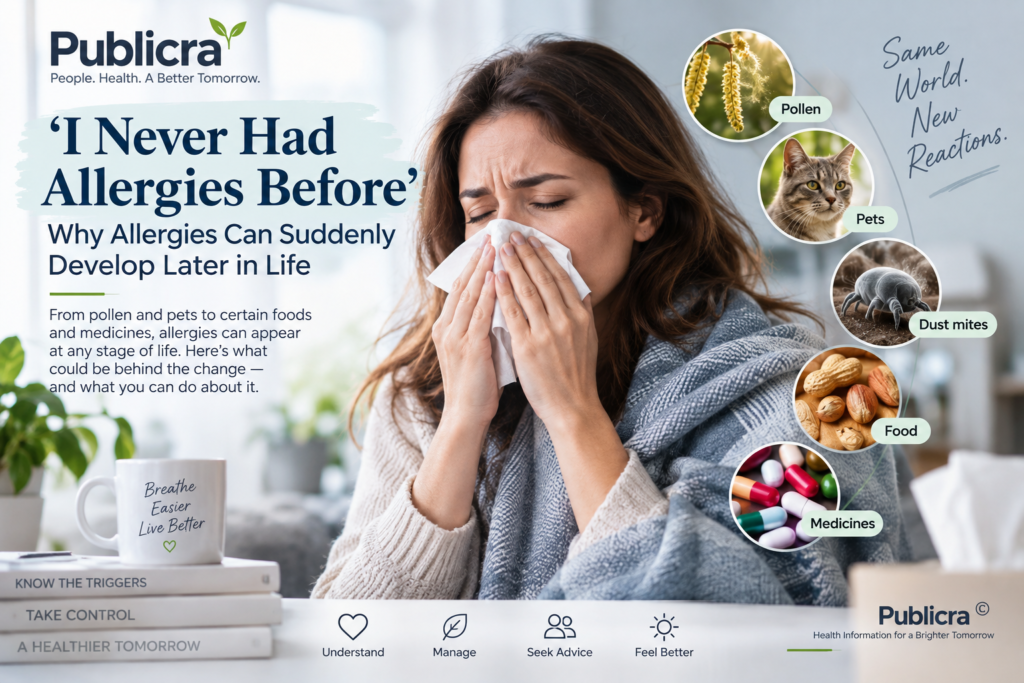
You may have eaten the same food, lived with pets or walked through pollen-filled parks for years without a problem — then suddenly start sneezing, itching or developing a rash. So why can allergies appear in adulthood, and what should you do when they do?
Many people think allergies are something you either have from childhood or never develop at all. But that is not always the case.
Allergic conditions can appear at different stages of life. Someone who previously tolerated a particular food or environmental substance may later experience symptoms after exposure.
The reason lies largely in the way our immune system identifies and responds to substances around us.
What actually happens during an allergy?
Your immune system normally protects you against potentially harmful organisms and substances.
An allergy occurs when the immune system reacts to a substance — known as an allergen — that is harmless to most people.
Depending on the type of allergy, exposure can trigger immune reactions that lead to inflammation and symptoms affecting the nose, eyes, skin, lungs or digestive system.
Common symptoms include:
- Sneezing
- Runny or blocked nose
- Itchy or watery eyes
- Skin itching
- Hives or rashes
- Swelling of the lips, face or other areas
- Coughing or wheezing
- Shortness of breath
- Abdominal cramps, vomiting or diarrhoea in some food allergies
The severity varies considerably. One person may experience only occasional sneezing, while another can develop a serious systemic reaction.
Why can an allergy suddenly appear in adulthood?
There isn’t always one identifiable reason.
The immune system changes throughout life, and the development of allergy can involve a combination of genetic susceptibility, environmental exposure and changes in immune responses.
In some cases, a person may have previously been exposed to an allergen without obvious symptoms. Sensitisation can develop over time, and later exposures may produce noticeable reactions.
Changes in environment can also matter. Moving to another country, starting a different job, getting a pet or being exposed to new pollens, dusts, moulds or chemicals can introduce allergens at different levels.
Occupational exposure can be particularly important for adults who regularly encounter substances such as:
- Flour
- Latex
- Cleaning chemicals
- Wood dust
- Laboratory materials
- Animal proteins
- Hairdressing products
- Industrial chemicals
Not every reaction that begins in adulthood is necessarily an allergy, however. Other medical conditions can produce similar symptoms, which is one reason persistent or unexplained symptoms deserve proper assessment.
What are the most common allergy triggers?
Allergens are everywhere, but only certain people develop allergic responses to them.
Pollen
Trees, grasses and weeds release pollen into the air. In susceptible people, inhaling pollen can trigger allergic rhinitis, commonly known as hay fever.
Symptoms can include sneezing, nasal congestion and itchy, watery eyes.
House dust mites
Dust mites are microscopic organisms commonly found in mattresses, pillows, carpets and upholstered furniture.
Their particles can trigger persistent nasal symptoms and may worsen allergic asthma in susceptible people.
Pets
People commonly refer to this as being “allergic to cats” or “allergic to dogs”.
The problem is usually proteins found in an animal’s skin flakes, saliva or other secretions rather than simply the fur itself.
Mould
Mould releases microscopic spores that can become airborne.
Damp or poorly ventilated environments can increase exposure, potentially triggering respiratory allergy symptoms in susceptible individuals.
Food
Foods associated with allergic reactions include:
- Peanuts
- Tree nuts
- Milk
- Eggs
- Fish
- Shellfish
- Wheat
- Soy
- Sesame
Food allergy should not be confused with food intolerance. An allergy involves the immune system, while intolerance generally involves different biological mechanisms.
Medicines
Some people experience allergic reactions to medicines.
Antibiotics and certain other medications are among possible triggers. However, not every side effect from a medicine represents a true drug allergy.
If you suspect a medicine caused an allergic reaction, speak with a healthcare professional rather than deliberately taking it again to “test” the reaction yourself.
Insect stings
Bees, wasps and other stinging insects can cause allergic reactions in susceptible people.
Most people experience pain and local swelling after a sting. A systemic reaction involving breathing problems, widespread hives, significant swelling, dizziness or collapse is much more serious.
Latex
Natural rubber latex can trigger allergic reactions in some people, particularly those who have repeated occupational exposure.
Is it an allergy or just a cold?
Allergies and viral respiratory infections can look surprisingly similar.
Both can cause a runny or blocked nose and sneezing.
However, itchy eyes, repeated sneezing and symptoms that consistently occur after a particular exposure may suggest an allergy.
Fever, body aches and feeling generally unwell are more commonly associated with infections than straightforward allergic rhinitis.
Duration can also provide a clue. A viral cold generally resolves, while an environmental allergy may continue or repeatedly return as long as exposure continues.
Symptoms alone cannot always establish the cause.
Can allergies disappear again?
Yes, the pattern of allergy can change throughout life.
Some childhood allergies may become less troublesome or disappear as a person grows older. Others persist into adulthood.
Conversely, some people develop new allergic conditions later in life.
This is why an allergy history is not necessarily permanent or predictable.
What can you safely do at home?
For mild environmental allergy symptoms, reducing exposure to the suspected trigger is usually the most useful starting point.
For example:
If pollen is the problem: limiting exposure when pollen levels are high, changing clothes after spending significant time outdoors and keeping windows closed during high-pollen periods may help.
If dust mites are suspected: regularly washing bedding and reducing dust accumulation may help decrease exposure.
If pets trigger symptoms: reducing exposure, particularly in the bedroom, may help.
For nasal allergy symptoms: saline nasal sprays or appropriate saline rinses can help some people manage nasal symptoms.
Over-the-counter antihistamines and some nasal treatments may also be useful for certain allergies, but medication should be selected according to the person’s symptoms, medical conditions and other medicines being taken.
Children, pregnant women and people with chronic medical conditions should obtain appropriate professional advice before using medicines.
What about popular “natural” allergy remedies?
The internet contains countless allergy remedies involving honey, herbs, supplements, essential oils and special diets.
“Natural” does not automatically mean safe or effective.
Some herbal products can themselves trigger allergic reactions or interact with medicines.
Home measures should therefore focus primarily on reducing exposure to known triggers and safely controlling mild symptoms, rather than trying unproven methods to “cure” an allergy.
When should you see a doctor?
Consider seeking medical advice when:
- Allergy symptoms repeatedly return
- You cannot identify the trigger
- Symptoms interfere with sleep, work or everyday activities
- Wheezing or breathing symptoms occur
- Skin reactions are persistent or severe
- You suspect a food allergy
- You develop symptoms after taking a medicine
- Over-the-counter treatments are not adequately controlling symptoms
- Reactions appear to be becoming more severe
A healthcare professional can review when symptoms occur, possible exposures and your medical history.
How do doctors find out what you’re allergic to?
Diagnosis begins with the history.
A clinician may ask:
What happened? When did it happen? What did you eat, touch, inhale or take beforehand? How quickly did symptoms appear? Has it happened more than once?
Depending on the suspected allergy, further investigation may include:
Skin-prick testing
Small amounts of selected allergens are introduced to the skin and the reaction is assessed.
Specific IgE blood testing
A blood test can measure IgE antibodies associated with particular suspected allergens.
Importantly, a positive allergy test does not always mean that a particular allergen is definitely responsible for a person’s symptoms.
Results need to be interpreted alongside the person’s clinical history.
For suspected food allergy, specialist-supervised testing or food challenges may sometimes be required.
What treatments are available?
Treatment depends on the type and severity of allergy.
Avoiding the trigger
Once a clinically relevant allergen has been identified, reducing or avoiding exposure is often a central part of management.
Antihistamines
Antihistamines block the effects of histamine, a chemical involved in many allergic reactions.
They can help with symptoms such as itching, sneezing and hives.
Some antihistamines can cause drowsiness, while newer preparations are generally less sedating.
Nasal corticosteroids
For allergic rhinitis, corticosteroid nasal sprays can reduce inflammation inside the nose and help control symptoms when used appropriately.
Eye drops
Allergy eye drops may help people experiencing itchy, watery or irritated eyes.
Asthma treatment
People whose allergies trigger asthma may require inhaled medications and an individual asthma management plan.
Immunotherapy
For selected allergies, specialists may recommend allergen immunotherapy.
This involves controlled exposure to specific allergens over time with the aim of changing the immune response and reducing symptoms.
It is not appropriate for every allergy and requires professional assessment.
When an allergy becomes an emergency
Most allergic reactions are not life-threatening.
But anaphylaxis is different.
Anaphylaxis is a severe allergic reaction that can develop rapidly and affect breathing and circulation.
Warning signs can include:
- Difficulty breathing
- Wheezing
- Swelling of the tongue or throat
- Throat tightness or difficulty swallowing
- Widespread hives together with other serious symptoms
- Sudden dizziness
- Weak, rapid pulse
- Significant fall in blood pressure
- Fainting or collapse
Food, medicines, insect venom and latex are among recognised triggers of anaphylaxis.
Anaphylaxis requires immediate emergency medical treatment.
People who have been prescribed an adrenaline (epinephrine) auto-injector should use it according to their emergency treatment plan and seek emergency medical care immediately.
Antihistamine tablets should not be relied upon as a substitute for adrenaline in anaphylaxis.
Even when symptoms improve after adrenaline, emergency medical assessment is still necessary because symptoms can sometimes return.
Can allergies be prevented?
There is no single method that prevents every allergy.
For someone with a known allergy, prevention focuses mainly on avoiding or reducing exposure and being prepared for accidental exposure.
Depending on the allergy, that may mean:
- Checking food labels carefully
- Informing restaurants about food allergies
- Informing doctors and pharmacists about confirmed medicine allergies
- Reducing exposure to environmental allergens
- Keeping prescribed emergency medicines accessible
- Wearing medical identification when recommended
- Having an emergency action plan for serious allergies
People who have experienced a severe reaction should discuss longer-term prevention and emergency planning with an allergy specialist.
The bottom line
Developing an allergy as an adult can be surprising, particularly when the suspected trigger is something you have encountered many times before.
But our immune responses are not necessarily fixed for life.
New allergies can appear, existing allergies can change, and symptoms that look like allergies may sometimes have another explanation.
Rather than assuming that every sneeze, rash or stomach upset represents an allergy, look for patterns and discuss recurrent or significant symptoms with a healthcare professional.
And there is one distinction everyone should know:
Sneezing, itching and a mild rash may be manageable allergy symptoms. Difficulty breathing, throat or tongue swelling, severe dizziness or collapse can indicate anaphylaxis — and that requires emergency medical care.
Quick Questions
Can I suddenly become allergic to something I’ve eaten for years?
It is possible for food allergy to develop after previous tolerance. A suspected new food allergy should be medically assessed rather than confirmed by deliberately eating the food again at home.
Are allergies contagious?
No. Allergic reactions are immune responses and cannot be passed from one person to another like an infection.
Can stress cause an allergy?
Stress itself does not necessarily create an allergy to a particular substance, although stress and other factors may influence the severity or perception of symptoms in some allergic conditions.
Can I find my allergy with a blood test alone?
Specific IgE blood testing can be useful, but results must be interpreted alongside symptoms and clinical history.
Should I avoid a food just because an allergy test is positive?
Not necessarily. Sensitisation on testing and clinically significant food allergy are not always the same thing. Discuss the result with an appropriately qualified healthcare professional before making major dietary changes.
Medical Disclaimer: This article provides general health information and is not a substitute for diagnosis, individual medical advice or emergency care. Anyone experiencing signs of a severe allergic reaction should seek emergency medical assistance immediately.