
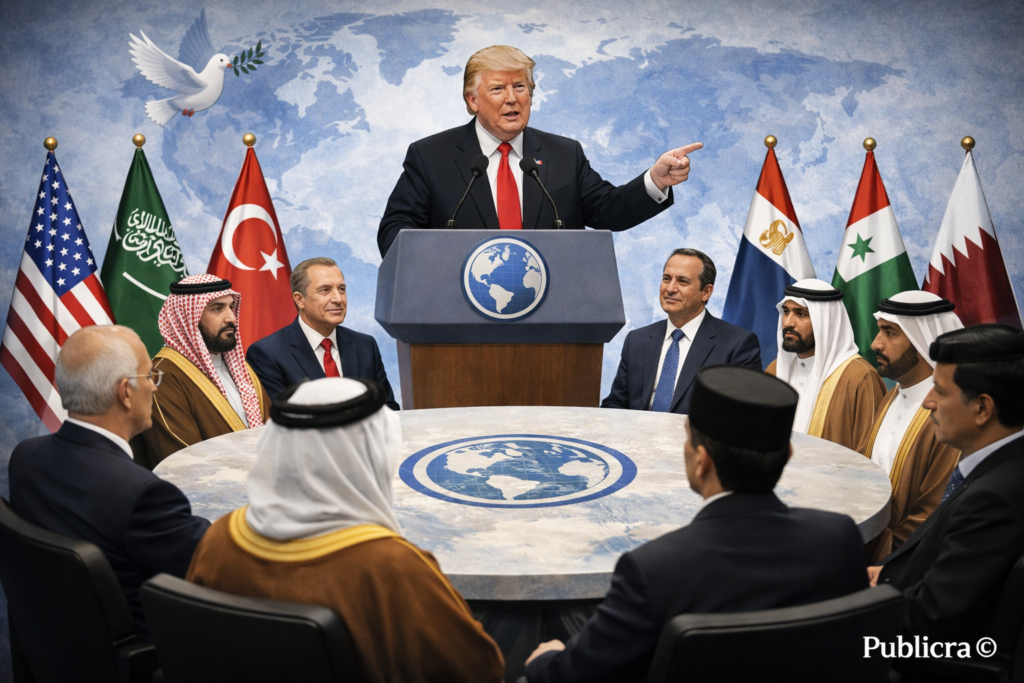
Saudi Arabia, Turkey, Egypt, Qatar, UAE and others join Trump’s Board of Peace, signaling a new diplomatic platform amid global conflicts.
Major U.S.-Led Diplomatic Initiative Takes Shape
A group of influential countries across the Middle East and Asia have agreed to joinsjoin U.S. President Donald Trump’s newly announced “Board of Peace,” marking a significant development in Washington’s approach to global diplomacy during a period of heightened international instability.
Saudi Arabia, Turkey, Egypt, Jordan, Indonesia, Pakistan, Qatar, and the United Arab Emirates have formally accepted invitations to participate, according to a joint statement released by the Saudi foreign ministry. Kuwait later confirmed it had also agreed to join the initiative.
Each participating nation will complete accession procedures in line with its domestic legal requirements, signaling a structured and coordinated diplomatic effort rather than a symbolic alliance.
What Is Trump’s ‘Board of Peace’?
While detailed operational frameworks have not yet been publicly disclosed, the Board of Peace is widely viewed as a multilateral consultative platform aimed at conflict de-escalation, regional stability, and diplomatic coordination between the United States and key global partners.
The initiative emerges at a time when conflicts in Gaza, Ukraine, the Red Sea, and parts of Africa, along with rising geopolitical competition involving China and Russia, are reshaping global alliances. Analysts say Trump’s move reflects an effort to position the United States as a central mediator while strengthening ties with strategically important Muslim-majority nations.
Middle East and Asia at the Core of the Initiative
The countries joining the Board of Peace represent critical diplomatic, economic, and security players:
- Saudi Arabia and the UAE bring regional influence and energy leadership
- Turkey bridges NATO, Europe, and the Middle East
- Egypt and Jordan remain pivotal to regional security frameworks
- Qatar plays an active role in mediation and dialogue
- Pakistan and Indonesia add South and Southeast Asian perspectives
Together, they reflect a geographically diverse coalition with the capacity to influence outcomes across multiple conflict zones.
Strategic Timing Amid Global Uncertainty
Trump’s announcement comes as international institutions face mounting pressure to manage overlapping crises. Trade disruptions, energy security concerns, humanitarian emergencies, and shifting military alliances have intensified calls for alternative diplomatic forums.
Supporters of the initiative argue that involving regional powers directly in structured dialogue may lead to faster de-escalation and reduce reliance on traditional, slower multilateral mechanisms. Critics, however, caution that the effectiveness of the Board will depend on transparency, inclusivity, and concrete follow-through.
A Familiar Trump Diplomacy Style
The Board of Peace reflects Trump’s signature foreign-policy approach: direct engagement, unconventional structures, and personal diplomacy. During his previous presidency, Trump launched high-profile initiatives ranging from Middle East normalization efforts to direct talks with adversaries, often bypassing established diplomatic channels.
Whether the Board of Peace becomes a lasting institution or a flexible diplomatic forum remains to be seen, but its early participation list suggests strong interest among U.S. partners seeking stability in an increasingly fragmented global order.
What Comes Next
Accession documents are expected to be signed in the coming weeks, after which formal meetings and working groups may be established. Observers will closely watch whether the Board of Peace takes on active mediation roles or remains a strategic consultation body.
As global tensions persist, the initiative could play a defining role in shaping U.S. engagement with the Middle East and Asia in 2026 and beyond.