
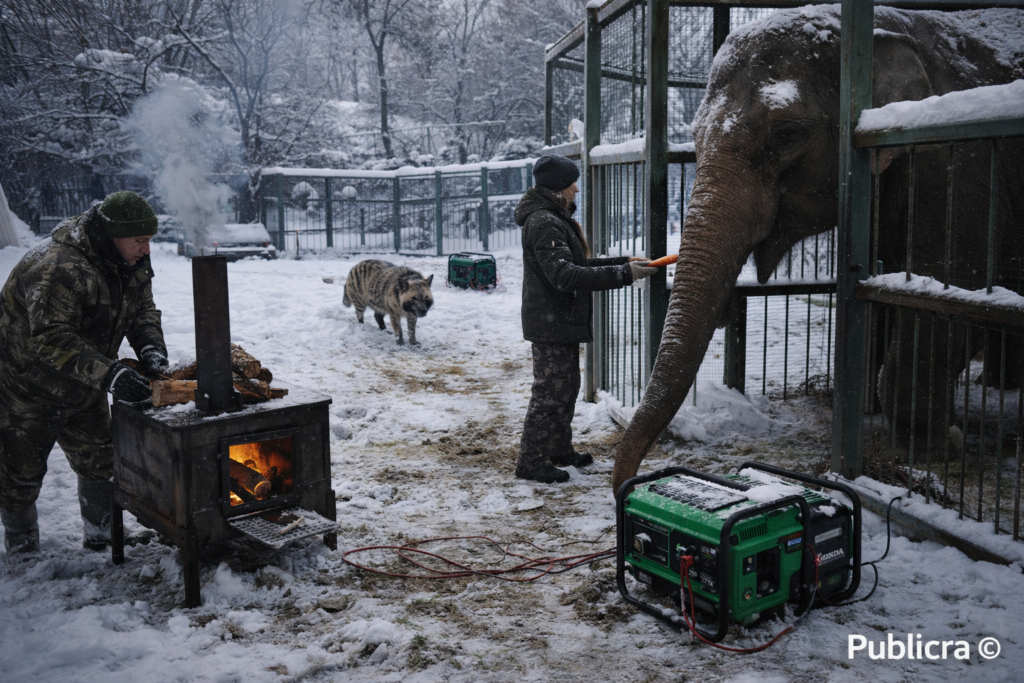
A winter scene at Kyiv Zoo showing animal enclosures operating on emergency power amid freezing temperatures and ongoing attacks on Ukraine’s energy grid.
As freezing temperatures grip Ukraine’s capital, staff at Kyiv Zoo are fighting a daily battle not only against winter, but against the cascading effects of Russia’s continued attacks on the country’s energy infrastructure. With electricity outages stretching for hours and heating systems pushed to their limits, zookeepers are working around the clock to protect hundreds of animals whose survival depends entirely on human intervention.
Animals Trapped in a City Under Fire
Unlike Kyiv’s human residents, many of whom have been urged to temporarily relocate to safer or warmer areas, the zoo’s animals have no escape. Among them is Tony, a 51-year-old gorilla and one of the zoo’s most iconic residents.
“You can tell people to go to the countryside, but I can’t say that to Tony,” said Kyrylo Trantin, director of Kyiv Zoo. “He doesn’t have relatives elsewhere. He depends on us completely.”
Tony’s enclosure must be kept at a constant 20 degrees Celsius, a challenge as nighttime temperatures plunge to minus 18 degrees Celsius and rolling blackouts disrupt electric heating. Zoo staff now rely on wood-burning stoves, delivering firewood up to five times a day to maintain safe conditions.
Generators Replace Power Grids
Russian air strikes over recent weeks have severely damaged Ukraine’s energy grid, leaving millions without consistent electricity, heating, or water. At Kyiv Zoo, emergency generators now operate day and night to sustain life-support systems for animals ranging from elephants and horses to bison, big cats, and exotic birds.
The generators power heating units, water pumps, and basic lighting, but fuel shortages remain a constant concern. Staff carefully ration diesel supplies, knowing that prolonged outages could quickly turn critical.
“We prepare for the worst,” said zoo staffer Viktoriia Sluzhenko. “Our goal is to survive autonomously for at least three days if everything shuts down.”
Water Shortages Add Another Layer of Risk
The power crisis has also disrupted water supplies across Kyiv, compounding the zoo’s challenges. Large animals, particularly elephants, require enormous quantities of water to remain healthy.
The zoo’s elephant alone consumes approximately 150 liters of water per day, forcing staff to maintain emergency reserves and continuously refill storage tanks whenever water becomes available.
Without reliable water pressure, keepers manually transport water across the grounds—often in freezing conditions—adding physical strain to an already exhausted workforce.
Emotional Toll on Staff
For zoo employees, the responsibility of keeping vulnerable animals alive comes while they themselves face uncertainty at home. Many endure the same outages, cold apartments, and air-raid sirens as the rest of Kyiv’s population.
“Every day is a battle for warmth and power,” Trantin said. “We are worried about our families, but here we are also responsible for hundreds of lives that cannot protect themselves.”
As Russia’s war approaches its fourth year, fatigue has set in, yet staff continue to report for duty despite the risks.
A Symbol of Civilian Resilience
Kyiv Zoo has become an unlikely symbol of civilian resilience amid war. While global attention often focuses on military developments, the struggle to protect animals highlights the broader humanitarian and environmental consequences of prolonged conflict.
International animal welfare organizations have offered limited assistance, but access remains restricted due to security concerns. Zoo officials continue to appeal for fuel, heating supplies, and logistical support as winter tightens its grip.
Uncertain Weeks Ahead
Meteorologists warn that cold conditions may persist into February, while Ukrainian officials caution that further attacks on energy facilities are likely. For Kyiv Zoo, each day without stable electricity increases the risk to animals already weakened by stress.
Yet despite the odds, staff remain committed.
“These animals survived pandemics, power cuts, and war,” Trantin said. “As long as we are here, we will not abandon them.”