
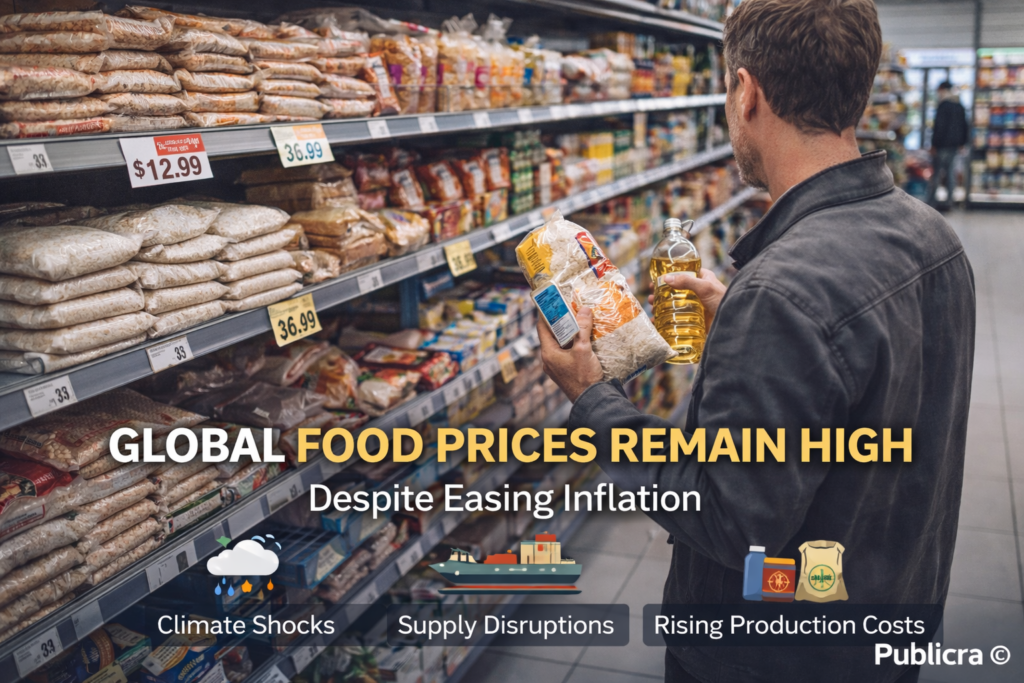
Climate shocks, supply disruptions, and rising production costs continue to push food prices higher worldwide, even as overall inflation shows signs of easing.
January 2026 — World Agriculture & Economy Desk
Even as headline inflation begins to cool in many countries, global food prices have remained stubbornly high. Consumers around the world are feeling the pinch at grocery stores and markets, wondering why staples like wheat, cooking oil, meat, and dairy remain expensive while other costs—like electronics, clothing, and fuel in some regions—stabilize.
The short answer is this: food prices are influenced by a complex mix of ongoing supply challenges, climate pressures, energy costs, geopolitical conflict, and shifting demand. These factors can keep food inflation elevated even when broader economic inflation slows.
This article breaks down the most important drivers behind high food prices in 2026, how they link to global economic trends, and what everyday consumers should know.
1. Food Prices Have Unique Drivers Compared to General Inflation
Headline inflation measures the average change in prices across a wide basket of goods and services—including housing, transportation, healthcare, clothing, and food. When inflation falls, it often reflects improvements in sectors like energy prices, manufacturing, and services.
However, food inflation behaves differently because:
- It’s heavily influenced by weather and agricultural cycles
- It depends on global supply chains with long lead times
- It responds to commodity markets, not just consumer markets
Even if general inflation drops, food prices may lag or even rise if these specific forces are active.
2. Climate Change Is Increasing Weather-Related Disruptions
One of the most powerful long-term influences on food prices is climate extremes.
Droughts and Heat Waves
Regions that grow major crops—such as wheat, corn, and soybeans—have experienced severe droughts in recent years. Drier soil, reduced water supplies, and higher temperatures shrink yields.
For example:
- The U.S. Midwest, a key grain producer, has faced repeated dry spells.
- Southern Europe and parts of Africa have seen record high temperatures during growing seasons.
Lower yields mean less supply, which pushes up commodity prices on international markets and ultimately translates to higher grocery bills for consumers.
Floods and Storms
Conversely, too much water can be just as damaging. Flooding in rice-producing regions of Asia and hurricanes in the Caribbean have wiped out crops and disrupted production cycles.
Because food products are perishable, delays and losses are harder to absorb than for durable goods like electronics or furniture. There is no warehouse buffer when crops fail.
3. Geopolitical Conflicts Have Distorted Supply Chains
Wars and regional tensions continue to disrupt agricultural exports from key producing countries.
Ukraine and Black Sea Grain Exports
Ukraine and Russia are among the world’s largest exporters of wheat, barley, and sunflower oil. Conflict in the region over the past several years has repeatedly interrupted shipments, raised insurance costs for shipping, and prompted export bans by some countries seeking to protect domestic supply.
These disruptions have ripple effects globally because buyers must compete for supplies from alternative producers—usually at higher prices.
Trade Restrictions and Export Limits
In response to weather shocks or political uncertainty, some countries impose export bans on key staples to keep food supplies available at home. While understandable politically, these restrictions reduce global supply and lead to price spikes internationally.
4. Rising Energy Costs Continue to Influence Food Production
Food production is energy-intensive.
Farmers depend on:
- Diesel fuel for tractors and harvest equipment
- Electricity for irrigation and refrigeration
- Fertilizers, the production of which requires natural gas
When fuel and energy costs rise, so do the costs of planting, harvesting, processing, storing, and transporting food.
Even if headline inflation falls because oil prices stabilize, energy costs tied to agriculture may remain elevated due to:
- Higher production costs for renewable energy inputs
- Continued geopolitical risk premiums
- Supply constraints in natural gas markets
These costs eventually feed into the prices consumers pay.
5. Fertilizer Prices and Soil Health Pressures
Fertilizer is another major cost driver, and its price has been volatile.
Factors affecting fertilizer costs include:
- Natural gas prices (a key input in nitrogen fertilizer)
- Regulatory limits on emissions
- Export restrictions by major producers
Expensive fertilizer means farmers may use less, which can reduce yields and push prices up.
Additionally, soil degradation and loss of arable land in many parts of the world mean yields are not increasing fast enough to keep pace with population growth—creating structural scarcity.
6. Demand Patterns Are Shifting
Global demand for food continues to grow due to:
- Population growth
- Urbanization
- Rising incomes in developing countries
- Increased meat and dairy consumption
Producing meat, dairy, and processed foods requires more agricultural inputs per calorie than plant-based staples. When demand shifts toward more resource-intensive foods, the cost pressures on agricultural systems intensify.
Even if inflation eases for consumer electronics, housing, or vehicles, food demand dynamics continue to create upward pressure on prices.
7. Logistics and Labor Bottlenecks Persist
Food supply chains stretch across cultures, continents, and climate zones. Any bottleneck in this chain can raise costs.
Shipping and Ports
Congestion at major ports, container shortages, and rising freight costs have added to food price inflation. These problems intensified during the pandemic and have proven slow to resolve fully.
Labor Shortages
Agriculture, food processing, and logistics have faced labor shortages in many regions due to aging workforces, migration restrictions, and pandemic-linked disruptions. Labor scarcity increases operational costs across the food supply chain.
8. Currency Fluctuations and Import Costs
Countries that import large portions of their food supply are sensitive to currency movements. Even if global commodity prices stabilize, a weaker local currency can make imports more expensive.
For many countries in Africa, Latin America, and Asia, weakening currencies have made basic foods costlier domestically, even as global inflation measures show improvement.
9. Monetary Policy and Interest Rates Affect Farmers Too
Central banks’ decisions to keep interest rates high influence agriculture indirectly. Higher borrowing costs mean:
- Farmers postpone equipment upgrades
- Smaller producers may struggle to borrow for planting seasons
- Investment in farming technology slows
While these effects are less visible to consumers than grocery prices, they contribute to weaker supply growth and higher long-term price levels.
10. Why Food Prices Don’t Fall as Quickly as Other Prices
Food markets have some unique characteristics:
- Non-elasticity of demand: People must eat regardless of price changes.
- Low inventories: Unlike manufactured goods, food stocks are limited by season and perishability.
- Global interdependence: Supply shocks in one region affect buyers everywhere.
Meanwhile, sectors like electronics can reduce prices due to technological improvements, competition, and falling input costs—trends that don’t apply to agriculture.
What This Means for Consumers
Even as broader inflation measures ease, consumers may continue to see:
- Higher prices for staples like bread, rice, meat, and cooking oil
- Seasonal fluctuations tied to weather or export policies
- Regional price differences based on currency movements and import reliance
Consumers can manage the impact by:
- Comparing prices and brands
- Planning meals around seasonal, local produce
- Supporting waste reduction to stretch food budgets
- Exploring community gardens and cooperative buying where available
Looking Ahead: Will Food Prices Fall?
Experts believe structural pressures on food prices will persist:
- Climate change will continue to disrupt production patterns
- Geopolitical risk will keep supply chains fragile
- Demand growth will not slow rapidly
However, improvements in farming technology, strategic stockpiles, and international cooperation on trade policies could help stabilize prices over the long term.
For now, food costs remain one of the most visible daily impacts of global economic shifts—even when headline inflation appears to be improving.