
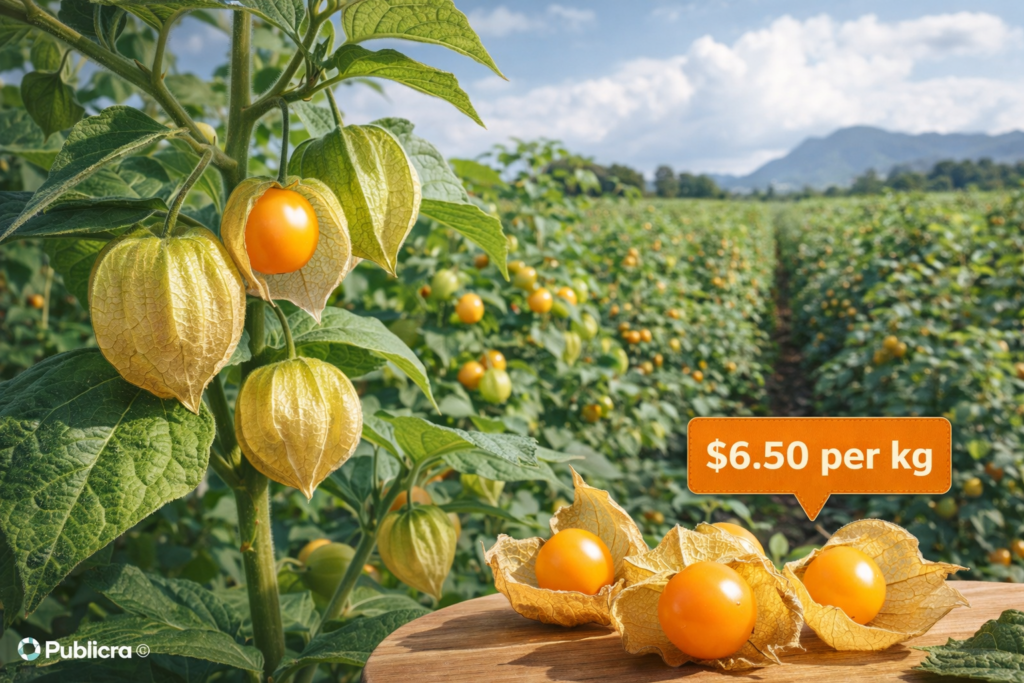
Also known as goldenberry, Inca berry, and aguaymanto—Cape gooseberry is gaining global attention for nutrition, farming potential, and rising demand in health-focused markets.
Cape gooseberry is a small, bright orange fruit wrapped in a papery husk, often described as tasting like a sweet-tart mix of pineapple, mango, and tomato. Its scientific name is Physalis peruviana, and it belongs to the nightshade family (Solanaceae), making it a botanical cousin of tomatoes and peppers. In recent years, this fruit has moved from being a “rare exotic” item to becoming a fast-growing niche crop across parts of South America, Africa, Asia, Europe, and even home gardens in the Middle East.
What’s pushing its popularity now? A mix of health trends, demand for superfruit snacks, interest in diversifying farm income, and consumer preference for colorful, antioxidant-rich foods. At the same time, producers face modern challenges: climate variability, logistics costs, stricter pesticide standards, and fluctuating export prices.
This guide covers everything you need to know—types/varieties, other names, benefits, current market price in USD, where it’s available, cultivation, and the best weather to grow it.
What Is Cape Gooseberry?
Cape gooseberry is a berry-like fruit that grows on a branching plant typically 0.6–1.5 meters tall. The fruit develops inside a lantern-shaped husk (calyx) which naturally protects it from pests and minor damage, and also helps extend shelf life.
Other Names (Common + Regional)
Cape gooseberry is famous for having many names depending on the country and market:
- Goldenberry (common in North America and health-food branding)
- Peruvian groundcherry
- Inca berry
- Aguaymanto (Peru)
- Uchuva (Colombia)
- Uvilla (Ecuador)
- Physalis (often used in Europe/retail labels)
- Poha berry (Hawaii)
- Rasbhari (parts of India)
These names matter for SEO and market selling: “goldenberry” often performs better in wellness markets, while “physalis” is widely recognized in European supermarkets.
Types and Varieties
Technically, most “types” sold worldwide are cultivars/strains of Physalis peruviana rather than completely different species. But in practical growing and market terms, you’ll see these categories:
1) Fresh Market Varieties (Large Fruit, Good Appearance)
- Bigger fruit size
- Bright orange color
- Strong husk coverage
- Better for export and supermarket packs
2) Processing Varieties (For Drying, Jam, Juice)
- Balanced sugar-acid taste
- Higher pulp content
- Often selected for drying consistency (less cracking, better texture)
3) Wild / Semi-Wild Types
- Smaller fruit
- Stronger tang
- Hardy in tougher conditions
- Often used in home gardens or local markets
Note: Some markets also confuse cape gooseberry with other Physalis species (like some “groundcherries”), so if you’re farming commercially, confirm the seed source is Physalis peruviana.
Health Benefits of Cape Gooseberry
Cape gooseberry is increasingly marketed as a functional fruit. While it’s not magic, it does have a strong nutritional profile.
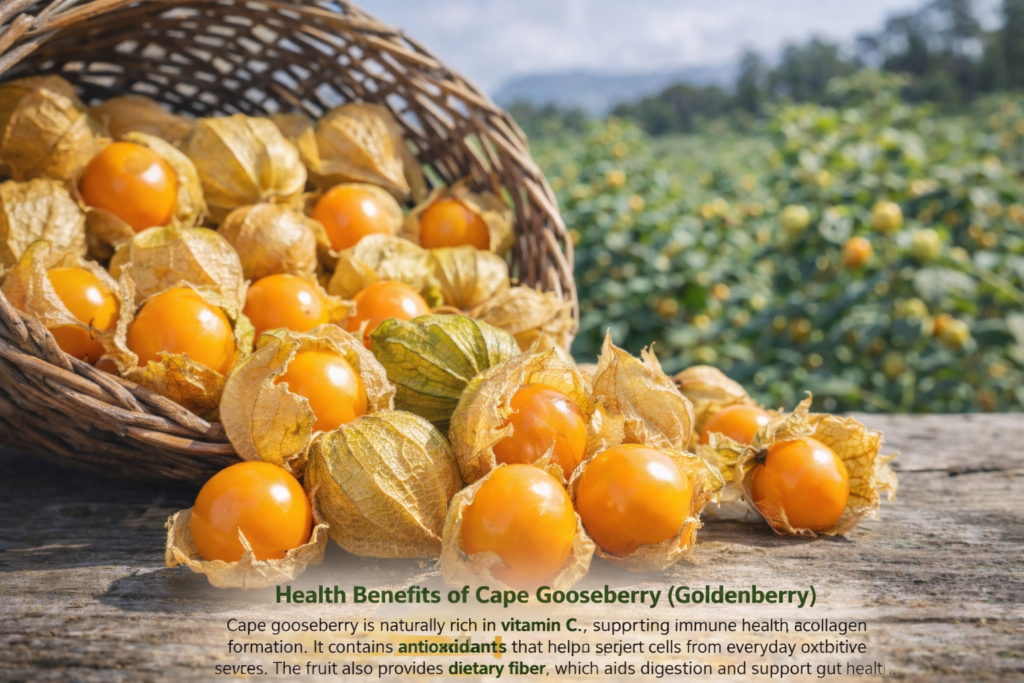
Key Benefits
1) Rich in antioxidants
The orange color signals carotenoids and other compounds that help protect cells from oxidative stress.
2) Vitamin C support
Vitamin C supports normal immune function and helps the body absorb iron from foods.
3) Fiber for digestion
Dietary fiber helps support regular digestion and can improve satiety (feeling full).
4) Low calorie, high flavor
It’s naturally sweet-tart, which makes it popular for healthy snacking compared to high-sugar desserts.
5) Popular in modern diets
Used in smoothies, yogurt bowls, salads, and dried fruit mixes—especially in “clean label” snack brands.
⚠️ Important note: This is a food, not a medicine. People with allergies or specific health conditions should check with a health professional.
Current Market Price in USD (2025–2026 Snapshot)
Prices vary heavily by country, season, quality, and whether it’s wholesale or retail.
Wholesale (Global reference ranges)
Recent global wholesale ranges are roughly $1.22 to $12.08 per kg depending on market and week.
That’s a wide spread because cape gooseberry can be sold as:
- Bulk commodity in producing countries (lower range)
- Premium imported “exotic fruit” in high-income markets (higher range)
United States import range (recent)
US import price trends have shown values around $5.17 to $9.27 per kg in recent data.
Retail price (consumer stores)
Retail often becomes 2–4× higher than wholesale due to packaging, transport, store margins, and perishability. In many supermarkets, it’s sold in small clamshell packs (100g–250g), which makes it look “expensive per kg.”
Ongoing issue: Logistics costs and cold-chain disruptions can suddenly push retail prices higher, especially for imported fruits.
Where Cape Gooseberry Is Available
Fresh Fruit Availability
- Supermarkets in Europe (often labeled “Physalis”)
- Specialty grocery stores in the US/Canada (often “Goldenberry”)
- Fruit markets in South America (common in Colombia/Peru/Ecuador)
- Organic shops and premium retailers globally
Dried / Processed Availability
- Dried goldenberries in health-food stores and online marketplaces
- Jams, sauces, and fruit snacks
- Smoothie mixes and granola blends
Major Producing / Exporting Regions
Colombia is widely recognized as a major producer and exporter, with strong export links to Europe.
Cultivation and Farming: How It’s Grown
Cape gooseberry can be grown commercially or in home gardens. It grows as a perennial in warm climates and as an annual in cooler areas.
Soil Requirements
- Well-drained soil (sandy loam is ideal)
- pH roughly slightly acidic to neutral (around 5.5–7.0 works well)
- Avoid waterlogged areas to reduce root problems
Propagation
- Mostly grown from seeds
- Also possible from stem cuttings (can fruit earlier in some cases)
Planting and Spacing (Practical Guide)
- Start seeds in trays/pots
- Transplant when plants are sturdy (15–25 cm tall)
- Space about 1–1.5 m between plants (varies by training system)
Flowering and Fruiting
Fruits form inside the husk, and ripen to orange-yellow. The husk often turns beige and dry when fruit is ready.
How to Grow Cape Gooseberry at Home
Step-by-step
- Choose seeds from a reliable source (labeled Physalis peruviana)
- Sow indoors in small pots; keep soil lightly moist
- Give strong light (sunny window or grow light)
- Transplant to bigger pot or ground when nights are warmer
- Stake or cage the plant—branches spread and fruit gets heavy
- Water regularly but don’t flood
- Feed lightly (compost or balanced fertilizer)
- Harvest when fruit is orange and husk is dry/papery
Container tip: A 20–30 liter pot works well with good drainage.
Weather Needed and Ideal Climate
Cape gooseberry grows best in mild-to-warm conditions and doesn’t like frost. Research and crop guides note it performs well in cool tropical/highland climates and needs adequate rainfall or irrigation.
Ideal Conditions (Practical Targets)
- Temperature: roughly 13–25°C is comfortable; avoid frost
- Sun: full sun to partial shade; good sunlight improves fruit quality
- Rainfall / Water: many guides mention around 800 mm minimum in growing season, with higher totals possible if drainage is good
- Wind: strong winds can break branches—windbreaks help
- Humidity: moderate humidity is fine; too much moisture can increase fungal issues
Ongoing issue: Climate change is creating more irregular rain and heat spikes, making irrigation planning and disease control more important for farmers.
Pests, Diseases, and Ongoing Farming Challenges
Cape gooseberry can face:
- Whiteflies, aphids, mites
- Caterpillars/cutworms (especially seedlings)
- Powdery mildew and fungal leaf spots
- Root rot in poorly drained soil
Current “ongoing” issues affecting growers
- Stricter pesticide residue limits in export markets
- Rising freight costs and cold-chain requirements
- Labor costs (hand-harvesting is common)
- Market volatility—prices can swing widely by season
How to Use Cape Gooseberry (Food Ideas)
- Eat fresh (remove husk)
- Mix into fruit salad
- Use as dessert garnish (restaurants love the husk look)
- Make jam, chutney, sauces
- Dry for snacks (popular in health markets)
Why Cape Gooseberry Is a Fruit to Watch in 2026
Cape gooseberry is no longer just an exotic garnish—it’s becoming a meaningful crop and a popular health-forward fruit worldwide. With demand rising for antioxidant-rich foods and clean snacks, goldenberries have strong market potential. But success depends on smart cultivation, post-harvest handling, and understanding price swings in the global fruit trade.
Whether you’re growing it in a home pot or considering small-scale farming, this fruit rewards good drainage, moderate weather, and consistent care—and it fits perfectly into 2026’s consumer trend toward nutrient-rich, flavorful foods.