
Exclusive diplomatic shift could reshape Horn of Africa geopolitics as Somaliland seeks investment, recognition, and technology partnerships
A Historic Turning Point for Somaliland
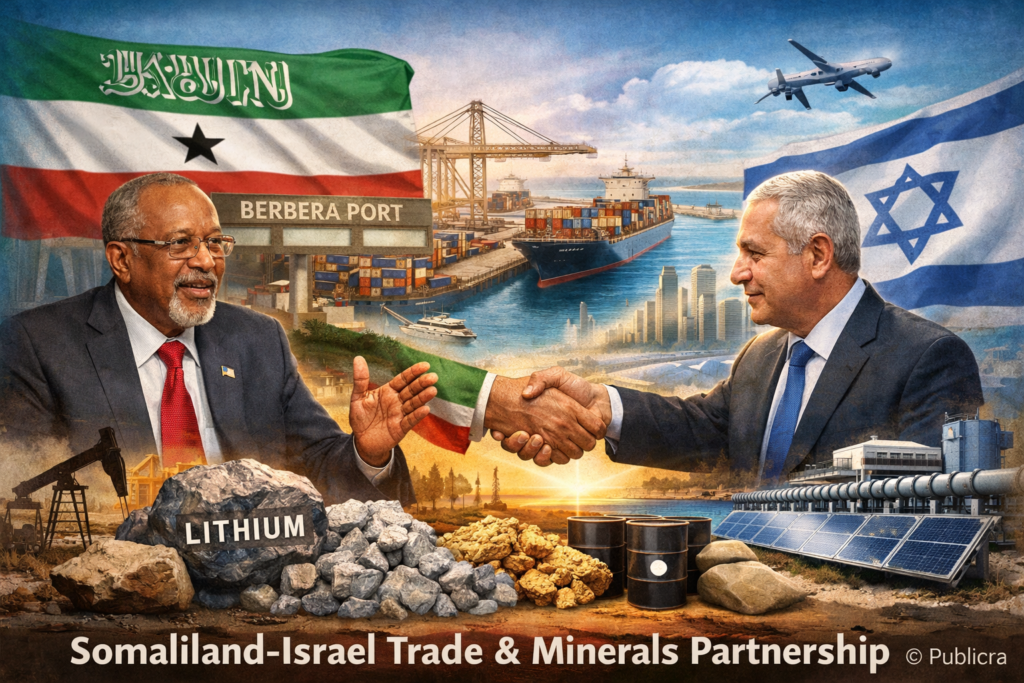
In a rapidly evolving geopolitical landscape, the self-declared Republic of Somaliland has signaled a major breakthrough in its decades-long pursuit of international legitimacy and economic development. Following Israel’s historic decision to become the first nation to formally recognize Somaliland’s independence, President Abdirahman Mohamed Abdullahi has revealed that a trade and partnership agreement with Israel is expected soon.
Speaking exclusively to Reuters, Abdullahi outlined Somaliland’s readiness to offer access to its vast untapped mineral wealth—including lithium, oil, gas, and marine resources—in exchange for Israeli investment, technology, and expertise. While no formal deal has yet been signed, the message from Hargeisa is clear: Somaliland is open for business, and the stakes are regional, strategic, and global.
This article explores the economic potential, geopolitical implications, international reactions, and future outlook of the emerging Somaliland–Israel partnership, with a focus on ongoing and current issues shaping the Horn of Africa.
A New Diplomatic Reality: Israel Recognizes Somaliland
Israel’s recognition of Somaliland in late December marked a seismic diplomatic shift. For over three decades, Somaliland has functioned as a de facto independent state with its own government, currency, elections, and security forces—yet without formal international recognition.
Israeli Prime Minister Benjamin Netanyahu described the move as an opportunity for immediate cooperation in:
- Agriculture and food security
- Health and medical innovation
- Technology and digital infrastructure
- Trade, energy, and broader economic development
For Somaliland, Israel’s recognition is more than symbolic. It represents a potential gateway to global legitimacy, foreign direct investment, and strategic alliances beyond Africa.
Trade and Investment: “The Sky Is the Limit”
President Abdullahi emphasized that current trade between Israel and Somaliland is effectively zero, but that this is expected to change rapidly.
“At the moment, there is no trade, and there is no investment from Israel. But we are hoping 100% for their investment, their trade,” Abdullahi told Reuters.
Key Sectors Somaliland Is Offering
Somaliland positions itself as a resource-rich but underexplored economy. According to its leadership, priority sectors include:
- Critical minerals (especially lithium)
- Oil and natural gas
- Marine resources (fisheries and seafood exports)
- Livestock and meat exports
- Renewable energy (solar and wind)
- Agriculture and irrigation
“We have meat, we have fish, we have minerals—and they need them,” Abdullahi said. “Trade can start from these main sectors.”
Lithium and Critical Minerals: Strategic Value in a Green Economy
One of the most strategically important aspects of Somaliland’s offer is its claimed lithium reserves, a mineral essential for:
- Electric vehicle batteries
- Renewable energy storage
- Smartphones and electronics
- Defense and aerospace technologies
In 2024, the Saudi Mining Company Kilomass secured an exploration agreement in Somaliland for lithium and other critical minerals, signaling growing international interest in the region’s subsurface wealth.
With global competition for lithium intensifying, Israeli access to Somaliland’s reserves could:
- Diversify Israel’s mineral supply chains
- Reduce dependence on politically sensitive sources
- Strengthen Israel’s position in clean-energy technology
Technology in Exchange: What Somaliland Wants From Israel
While Somaliland offers raw materials and strategic access, it seeks technology transfer and know-how in return—areas where Israel is globally competitive.
Priority Technology Areas
- Water desalination and irrigation systems
- Agricultural technology (AgriTech)
- Digital health and telemedicine
- Cybersecurity and e-governance
- Renewable energy infrastructure
For a country facing climate stress, limited rainfall, and infrastructure gaps, Israeli technology could accelerate development far beyond traditional aid models.
Military Cooperation: Cautious, Not Confirmed
Speculation has emerged over whether Israel might establish a military presence in Somaliland, given the region’s strategic location near:
- The Red Sea
- Bab el-Mandeb Strait
- Gulf of Aden shipping lanes
President Abdullahi addressed these concerns directly:
While Somaliland hopes for future military cooperation, Israeli military bases have not been discussed, he said.
This cautious tone reflects Somaliland’s desire to balance new partnerships without escalating regional tensions.
International Reactions: Praise, Anger, and Opposition
Somalia’s Response
The decision by Israel drew a sharp and angry response from Somalia, which continues to claim Somaliland as part of its sovereign territory. Mogadishu condemned the move as a violation of Somalia’s territorial integrity.
Criticism From Global and Regional Powers
Israel’s recognition has also been criticized by:
- China
- Turkey
- Egypt
- African Union
These actors argue that unilateral recognition could destabilize the Horn of Africa and undermine existing diplomatic frameworks.
United States and UAE: Watching Closely
President Abdullahi expressed optimism that other major powers will eventually follow Israel’s lead.
United States
Abdullahi stated he has a strong working relationship with Washington and believes U.S. recognition is possible “someday,” particularly under President Donald Trump.
Notably, Abdullahi pitched Somaliland investment opportunities at the Davos World Economic Forum, at a dinner attended by Trump’s son Eric Trump—a signal of active engagement with influential U.S. circles.
United Arab Emirates
The United Arab Emirates is already a key economic partner. Global ports operator DP World is a major investor in Berbera Port, one of Somaliland’s most strategic assets.
“The UAE has not decided officially yet, but they are one of the countries we expect to recognise Somaliland,” Abdullahi said.
Saudi Arabia and the Gulf: Investment Over Recognition—for Now
Somaliland also expects increased investment from Saudi Arabia, particularly in:
- Mining
- Energy
- Livestock trade
While formal recognition may take time, economic engagement appears to be moving faster than diplomacy.
Why Somaliland Matters Strategically
Geographic Advantage
Somaliland sits at the crossroads of:
- Africa
- Middle East
- Global shipping routes
Its coastline along the Gulf of Aden gives it outsized strategic relevance compared to its population size.
Political Stability
Unlike much of southern Somalia, Somaliland has maintained relative stability, peaceful elections, and functioning institutions—making it more attractive to investors seeking predictability.
Challenges Ahead: Recognition, Regulation, and Risk
Despite growing momentum, Somaliland faces significant challenges:
- Lack of UN recognition limits access to international finance
- Legal uncertainty around contracts and sovereignty
- Regional political backlash
- Infrastructure and human capital gaps
Turning mineral wealth into sustainable growth will require transparency, regulation, and long-term planning.
What Comes Next: Visit to Israel and Partnership Talks
President Abdullahi confirmed he has accepted an invitation from Netanyahu and will visit Israel soon, though no official date has been announced. Israeli Foreign Minister Gideon Saar visited Somaliland recently, signaling ongoing diplomatic momentum.
A formal partnership agreement—rather than a narrow trade deal—is expected to be the first major outcome.
A Defining Moment for Somaliland
Israel’s recognition and the prospect of a trade and investment partnership mark one of the most consequential moments in Somaliland’s modern history. By leveraging its minerals, strategic location, and political stability, Somaliland is attempting to convert long-sought diplomatic recognition into tangible economic gains.
Whether this gamble reshapes the Horn of Africa—or provokes deeper geopolitical fault lines—will depend on how swiftly words turn into agreements, and agreements into development.
One thing is certain: Somaliland is no longer waiting quietly on the sidelines of global politics.