
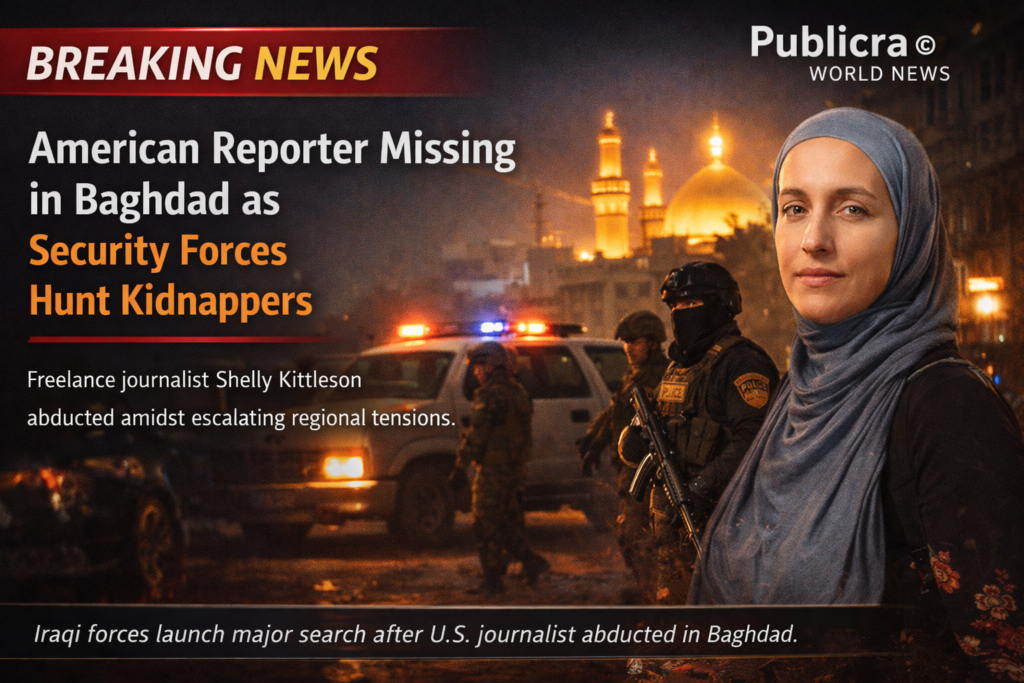
Freelance reporter seized in central Baghdad as Iraqi authorities launch high-priority manhunt
The abduction of an American journalist in Baghdad on March 31, 2026, has reignited global concerns about security conditions in Iraq, especially for foreign nationals and media professionals. The incident has prompted Iraqi authorities to launch an urgent manhunt, while international observers warn of increasing instability linked to broader regional conflicts.
The journalist, identified as Shelly Kittleson, is a seasoned freelance reporter with extensive experience covering conflict zones across the Middle East. Her kidnapping underscores the persistent dangers journalists face while reporting from volatile regions.
What Happened: Timeline of the Kidnapping
According to Iraqi security officials, the kidnapping occurred in central Baghdad on Saadoun Street, a busy commercial district known for hotels and public activity.
Key Details of the Incident
- The abduction involved two vehicles, indicating a coordinated operation
- Kittleson was forcibly transferred from one vehicle to another
- Iraqi security forces quickly initiated a pursuit operation
- One suspect vehicle crashed near Al-Haswa in Babil province
- Authorities arrested one suspect, but others remain at large
- The journalist was not found in the intercepted vehicle
Security checkpoints across Baghdad and surrounding provinces were immediately alerted, suggesting a high level of urgency and coordination.
Who Is Shelly Kittleson?
Shelly Kittleson is a respected freelance journalist with years of experience reporting from conflict zones such as Iraq, Syria, and Afghanistan.
Professional Background
- Contributor to major international outlets
- Focus areas include:
- Armed groups and militias
- Civilian impact of war
- Regional security dynamics
- Known for in-depth reporting on:
- The fight against ISIS
- Iran-backed militias in Iraq
Her work has been widely recognized for shedding light on complex geopolitical issues affecting the Middle East.
Iraqi Authorities Respond: Intelligence-Led Operation Underway
The Iraqi Interior Ministry confirmed that a foreign journalist had been kidnapped and announced an ongoing operation to locate the perpetrators.
Security Measures Taken
- Deployment of intelligence-driven field operations
- Activation of regional checkpoints
- Coordination between multiple security units
- Seizure of one vehicle used in the crime
- Arrest of at least one suspect
Authorities stated that the operation is based on “precise intelligence”, indicating that they may already have leads on the remaining suspects.
Why Was the Journalist Targeted?
As of now, no group has claimed responsibility, and the motive remains unclear. However, several possible factors are being considered.
Potential Motives
1. Political and Militia Activity
Iraq hosts multiple armed groups, including Iran-aligned militias that have previously targeted foreign nationals.
2. Regional Conflict Spillover
The ongoing tensions involving the United States, Israel, and Iran have increased instability in Iraq, making foreign individuals more vulnerable.
3. Journalist Targeting
Journalists reporting on sensitive topics such as militias, war crimes, and geopolitics may become targets due to their work.
Rising Kidnapping Risks in Iraq
The kidnapping is not an isolated incident. Iraq has a history of abductions involving foreign nationals, particularly in times of heightened political tension.
Recent Cases
- 2023: A foreign graduate student was abducted in Baghdad
- 2025: The same individual was released after being held by a militia group
- Ongoing incidents involving:
- Aid workers
- Contractors
- Journalists
These cases highlight a pattern of targeting foreigners for political leverage or financial gain.
Impact on Journalism and Press Freedom
The kidnapping raises serious concerns about press freedom and the safety of journalists operating in conflict zones.
Key Concerns
- Increased risk may limit ground reporting
- Media outlets may withdraw correspondents
- Reduced coverage of critical issues
- Greater reliance on second-hand reporting
Journalists like Kittleson play a crucial role in documenting realities on the ground. Incidents like this threaten that mission.
International Response and U.S. Position
The U.S. State Department confirmed awareness of the situation and emphasized the importance of American citizens’ safety abroad.
Official Statements
- Monitoring the situation closely
- No detailed comments due to privacy and security concerns
- Reaffirmed commitment to protecting U.S. nationals
The U.S. Embassy in Baghdad had already issued warnings about increased kidnapping risks prior to this incident.
Security Situation in Baghdad: A Closer Look
While Baghdad has seen improvements in security over recent years, risks remain—especially for foreigners.
Current Challenges
- Presence of multiple armed factions
- Weak enforcement in certain regions
- Political instability
- Spillover from regional conflicts
Areas like Saadoun Street, though commercial, are not immune to security breaches.
What Happens Next?
The situation remains fluid, with Iraqi forces continuing their search for the kidnappers and the missing journalist.
Expected Developments
- Expanded search operations
- Possible identification of suspects
- International diplomatic involvement
- Increased security measures for foreign nationals
The coming days will be critical in determining the outcome of the investigation.
Global Implications of the Incident
This kidnapping has broader implications beyond Iraq.
International Impact
- Heightened travel advisories
- Increased insurance and operational risks for media organizations
- Diplomatic pressure on Iraq to improve security
- Renewed discussions on journalist safety protocols
The abduction of Shelly Kittleson is a stark reminder of the dangers journalists face while reporting from conflict zones. As Iraqi authorities intensify their search, the international community watches closely, hoping for her safe return.
This incident not only highlights ongoing security challenges in Iraq but also raises urgent questions about the safety of journalists and foreign nationals in volatile regions.