
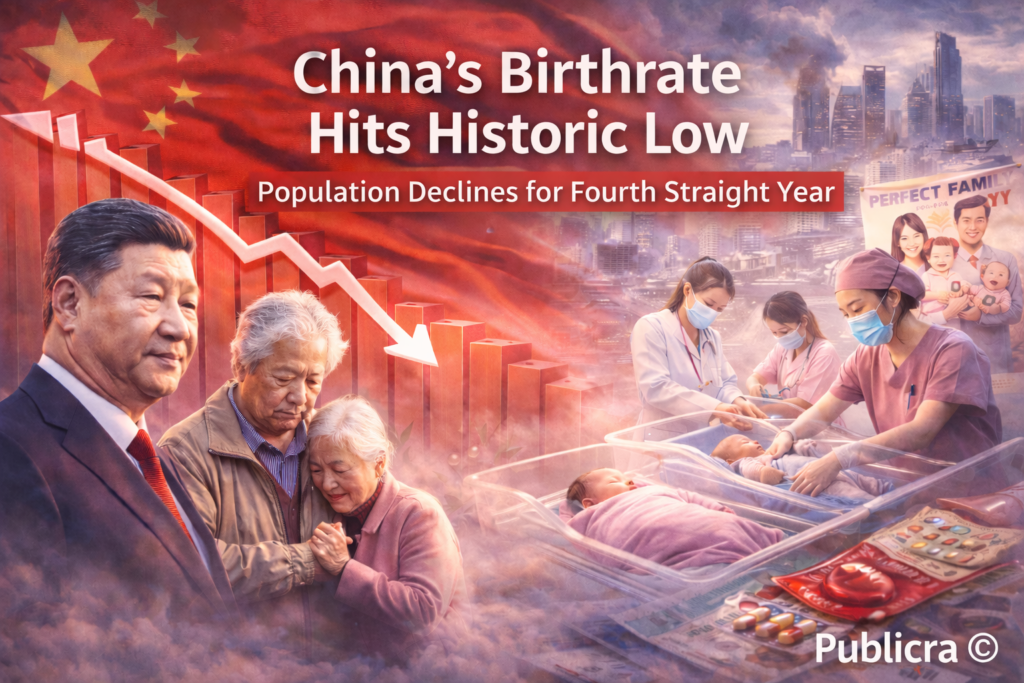
Policy incentives fail to reverse demographic crisis as deaths continue to outnumber births
China’s birthrate has fallen to its lowest level since the founding of the People’s Republic in 1949, deepening a demographic crisis that policymakers have struggled to contain. Official data released this week show that China’s population declined for a fourth consecutive year, as deaths again exceeded births in 2025.
Government figures indicate that approximately 7.9 million babies were born last year, a sharp drop from the previous year, while deaths rose to more than 11 million. As a result, China’s birthrate fell to 5.63 births per 1,000 people, the lowest level ever recorded.
The data underline the scale of China’s demographic challenge. A shrinking and aging population threatens long-term economic growth, placing pressure on the labor force, pension systems and health care infrastructure at a time when the economy is already slowing.
In recent years, authorities have rolled out a wide range of measures aimed at encouraging childbirth, including financial incentives, housing subsidies and public campaigns promoting marriage and family life. Some local governments have gone further, introducing controversial steps such as stricter oversight of reproductive health policies and new taxes on contraceptive products.
These efforts have largely failed to change attitudes among younger generations. Many young adults cite rising living costs, job insecurity, high housing prices and the expense of raising children as reasons for delaying marriage or choosing not to have children at all.
Demographers warn that China may have already crossed a critical threshold. With fertility rates remaining extremely low, experts say it will be difficult to halt population decline even with aggressive policy intervention.
The situation has been worsened by a rapid increase in the elderly population. The number of citizens aged 60 and above is expected to surge in the coming decade, while the working-age population continues to shrink, raising concerns about who will support China’s aging society.
China relaxed its one-child policy nearly a decade ago and later allowed families to have up to three children, but the policy shifts came too late to reverse long-term demographic trends.
As officials search for new solutions, analysts say restoring confidence among young people — through economic stability, affordable housing and stronger social welfare systems — may prove more effective than direct birth incentives alone.