
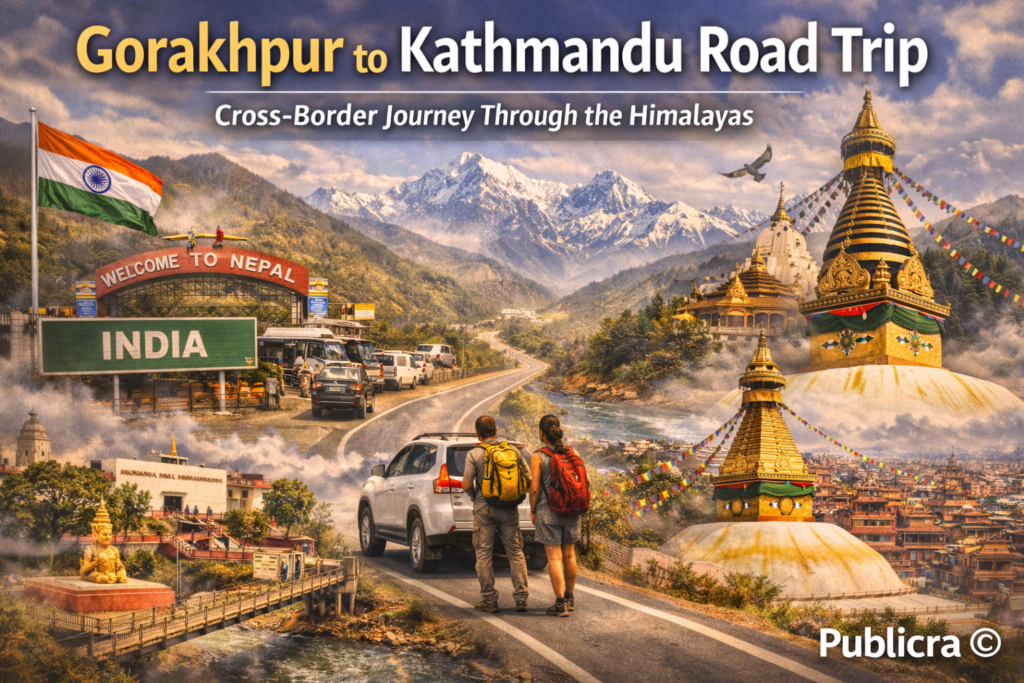
From India’s spiritual heartland to Nepal’s mountain capital, here’s the complete 2026 guide to routes, border rules, safety, and must-see stops
Why the Gorakhpur–Kathmandu Road Trip Is Trending in 2026
Cross-border road travel between India and Nepal is seeing renewed interest in 2026, driven by improved road connectivity, simplified border processes, and rising spiritual tourism. The Gorakhpur to Kathmandu road trip has become one of the most popular overland routes for Indian travelers seeking a blend of pilgrimage, nature, and cultural discovery.
This journey is more than just a drive—it’s a moving postcard of the Gangetic plains giving way to forested foothills and Himalayan valleys. From sacred Buddhist sites like Lumbini to bustling Nepalese towns such as Butwal and Narayanghat, and finally to the vibrant capital Kathmandu, the route offers a rich, immersive experience for families, pilgrims, photographers, and adventure seekers alike.
In this updated 2026 guide, we break down everything you need to plan a smooth and memorable road trip—routes, documents, safety, current border realities, best pit stops, and what awaits you in Kathmandu.
Route Overview: Gorakhpur to Kathmandu by Road (2026 Update)
Total Distance: ~370 km
Estimated Travel Time: 10–12 hours (can extend due to border checks, weather, or traffic)
Primary Route:
Gorakhpur → Sonauli (India–Nepal Border) → Bhairahawa → Butwal → Narayanghat → Mugling → Kathmandu
What Makes This Route Special
- Smooth highways on the Indian side
- Rolling hills and river valleys in Nepal
- Forest stretches near Chitwan
- Dramatic mountain roads approaching Kathmandu
Recent road maintenance projects in Nepal have improved connectivity on the Butwal–Mugling stretch, though travelers should still expect narrow roads and winding hill sections near Mugling.
Cross-Border Travel: Updated Rules and Tips (2026)
Documents Required
For Indian citizens, Nepal remains visa-free. Carry:
- Passport or Voter ID (recommended for smoother processing)
- Aadhaar card (accepted in many cases, but passport is safest)
- For children: Birth certificate + guardian ID
- If traveling by private vehicle/taxi:
- Vehicle RC
- Insurance
- Cross-border permit (handled by professional drivers/taxi services)
Currency & Connectivity
- INR accepted in Nepal for small transactions (₹100 and below preferred)
- Carry Nepalese Rupees for local purchases
- Indian mobile networks may have patchy service—consider:
- International roaming
- Local Nepali SIM in Bhairahawa or Kathmandu
Best Stopovers Along the Way
1. Sonauli Border – Gateway to Nepal
The busiest crossing point between India and Nepal. Expect crowds during peak travel seasons. Facilities include currency exchange, food stalls, and restrooms. Border processing is generally smooth for Indians but can take 30–90 minutes depending on traffic.
2. Bhairahawa – Entry Point to Nepal
A practical first stop for rest, meals, SIM cards, and fuel. Its proximity to Lumbini makes it a strategic halt for pilgrims.
3. Lumbini – Birthplace of Lord Buddha
A UNESCO World Heritage Site and one of South Asia’s most significant spiritual destinations. The Maya Devi Temple, Ashokan Pillar, and international monasteries make it a peaceful detour before heading toward Kathmandu.
4. Butwal – The Scenic Transition
A lively town where flat terrain begins giving way to hills. Ideal for a meal break and fuel stop.
5. Narayanghat & Chitwan National Park
Nature lovers can detour to Chitwan National Park, famous for wildlife safaris, birdwatching, and jungle lodges. This adds a wildlife chapter to your spiritual journey.
6. Mugling – Rivers and Roads Converge
A dramatic junction of rivers and highways. Roads narrow and climb from here, offering some of the most scenic views of the trip.
Reaching Kathmandu: What Awaits You
Kathmandu is a tapestry of ancient temples, Buddhist stupas, vibrant markets, and Himalayan backdrops. The city balances chaos and calm—prayer flags flutter above busy streets, and centuries-old shrines stand beside modern cafés.
Top Places to Visit in Kathmandu
1. Pashupatinath Temple
One of Hinduism’s holiest Shiva temples, located along the Bagmati River. Evening aarti rituals attract pilgrims from across South Asia.
2. Swayambhunath (Monkey Temple)
An ancient hilltop stupa with panoramic views of Kathmandu Valley.
3. Boudhanath Stupa
A spiritual hub for Tibetan Buddhists, perfect for meditation and cultural immersion.
4. Kathmandu Durbar Square
Royal palaces, courtyards, and temples reflecting Nepal’s royal heritage.
5. Thamel
The tourist heart of Kathmandu—ideal for shopping, dining, nightlife, and booking treks.
Best Time for the Road Trip
- March–June: Pleasant weather, best visibility
- September–November: Post-monsoon greenery, ideal road conditions
- Avoid July–August: Monsoon rains can cause landslides and delays
Safety, Road Conditions & Current Travel Advisory
In 2026, India–Nepal road travel remains safe for tourists. However:
- Drive cautiously in hill sections
- Avoid night driving near Mugling
- Keep emergency contacts and offline maps
- Check local advisories during monsoon months
Accommodation & Food
From budget guesthouses to mid-range hotels in Kathmandu and Bhairahawa. Food options include Indian thalis, Nepali dal bhat, momos, thukpa, and Tibetan cuisine.
Why a Road Trip Beats Flights
- Scenic freedom
- Spiritual detours (Lumbini)
- Flexible stops
- Cost-effective for families and groups
- Rich cultural immersion
More Than a Drive, It’s a Journey of Cultures
The Gorakhpur to Kathmandu road trip is not just about reaching a destination—it’s about crossing cultures, landscapes, and spiritual worlds in a single journey. From Indian plains to Nepalese hills, from Buddhist serenity to Hindu devotion, every stretch of the road tells a story. With proper planning and awareness of current travel conditions, this cross-border adventure can be one of the most rewarding road trips in South Asia.