
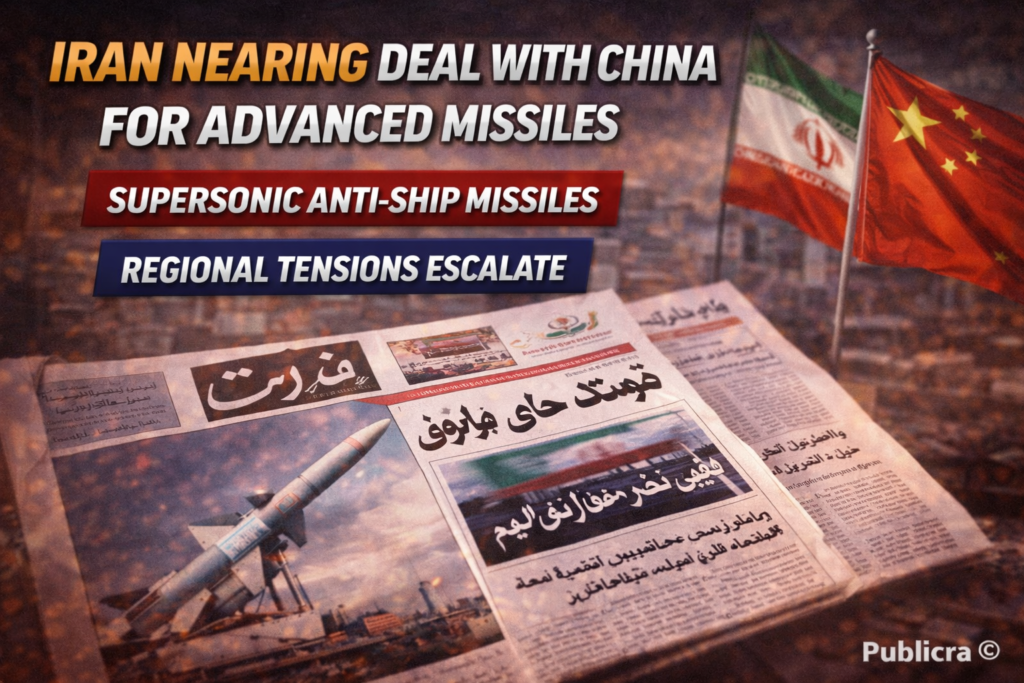
Potential CM-302 missile purchase could shift naval balance in the Gulf amid US military build-up
Iran is reportedly close to finalizing a deal with China to acquire advanced supersonic anti-ship cruise missiles, a development that could significantly alter the strategic balance in the Persian Gulf and nearby waters. The potential purchase comes at a moment of heightened tension, with major naval forces operating close to Iran’s coastline and diplomatic efforts over Iran’s nuclear program under intense strain.
The missiles under discussion are designed to fly low and fast, challenging shipborne defenses and raising concerns among military planners about the vulnerability of large naval platforms. If confirmed and implemented, the deal would represent one of the most consequential arms transfers to Iran in years, deepening military cooperation between Beijing and Tehran while complicating security calculations for the United States and its allies.
The CM-302 Missile and Why It Matters
The CM-302 is marketed as a high-speed anti-ship cruise missile capable of evading conventional naval defenses through low-altitude flight profiles and rapid terminal speed. Designed for deployment from multiple platforms, including coastal batteries, ships, and potentially aircraft, such missiles are optimized for denying adversaries freedom of movement in contested waters.
For Iran, acquiring this class of weapon would significantly enhance its anti-access and area-denial capabilities. The Persian Gulf and adjacent sea lanes are narrow and heavily trafficked, making them particularly sensitive to the presence of advanced anti-ship systems. Even a limited number of such missiles could alter risk assessments for naval operations, commercial shipping insurance, and regional deterrence postures.
The Strategic Context: A Region on Edge
The reported negotiations come against a backdrop of regional instability and great-power rivalry. The Middle East has seen heightened military activity, increased deployments of naval assets, and a broader strategic competition involving the United States, China, and Russia.
For Washington, maintaining freedom of navigation and the security of maritime chokepoints is a core strategic interest. For Tehran, strengthening coastal defense and deterrence is seen as essential to offset what it views as encirclement and coercive pressure. Beijing’s growing role as a security partner for Iran reflects China’s expanding global footprint and its interest in safeguarding energy routes and strategic partnerships.
Deepening China–Iran Military Ties
China and Iran have steadily expanded defense and security cooperation in recent years. Joint exercises, technology exchanges, and diplomatic coordination signal a maturing relationship that goes beyond trade and energy.
A missile deal of this scale would underscore China’s willingness to support Iran’s military modernization, even as Beijing seeks to balance its relations with multiple regional actors. For China, deepening ties with Iran aligns with broader objectives of diversifying partnerships and asserting influence in regions traditionally dominated by Western military power.
Implications for US Naval Operations
Advanced anti-ship missiles pose a distinct challenge to large naval vessels operating near contested coastlines. The presence of supersonic systems would require adjustments in operational planning, including expanded missile defense coverage, changes in deployment patterns, and greater emphasis on electronic warfare and early-warning systems.
The risk calculus for deploying aircraft carriers and other high-value assets could shift, prompting the US Navy and allied forces to operate at greater distances or invest further in counter-measures. This dynamic underscores how technological upgrades in one country can cascade into broader shifts in regional military posture.
Sanctions, Arms Transfers, and Legal Gray Zones
The potential transfer of advanced missile systems to Iran intersects with international sanctions regimes and export control frameworks. While sanctions have fluctuated over the years, arms transfers to Iran remain politically sensitive and legally complex.
From Iran’s perspective, military procurement is framed as a sovereign right to self-defense. From the perspective of Western governments, such transfers risk undermining efforts to constrain Iran’s missile capabilities and reduce regional tensions. The legal ambiguity surrounding arms sales in this context reflects the fragmented nature of international enforcement and the competing interests of major powers.
The Impact on Gulf Security Architecture
Gulf states closely monitor developments in Iran’s military capabilities. Enhanced anti-ship systems could affect regional naval cooperation, defense spending, and maritime security arrangements.
Neighboring countries may respond by accelerating their own acquisitions of missile defense systems, coastal surveillance technologies, and naval platforms. This action-reaction cycle risks intensifying an arms competition that diverts resources from economic development and increases the probability of miscalculation during periods of crisis.
Economic Consequences for Global Shipping
The Persian Gulf and adjacent waterways are among the world’s most vital energy corridors. Any perception of increased risk to shipping can influence insurance premiums, freight rates, and energy prices.
The introduction of more advanced anti-ship capabilities could elevate risk assessments for commercial vessels, even if actual hostilities do not occur. Market reactions to heightened security risks can ripple through global supply chains, affecting fuel prices, manufacturing costs, and consumer inflation in distant economies.
Iran’s Military Modernization After Conflict
Iran’s interest in upgrading its arsenal reflects lessons drawn from recent conflicts and confrontations. Military planners often reassess vulnerabilities exposed during periods of heightened tension, seeking to close gaps through targeted acquisitions.
For Tehran, enhancing maritime strike capabilities serves both defensive and deterrent purposes. By complicating adversaries’ operational planning, Iran aims to raise the costs of potential military action against it, thereby strengthening its bargaining position in diplomatic negotiations.
Technology, Deterrence, and Escalation Risks
The spread of advanced missile technology raises broader questions about deterrence stability. While enhanced capabilities can deter aggression, they can also increase the stakes of any confrontation.
Supersonic anti-ship missiles compress decision-making timelines during crises, leaving less room for de-escalation once hostilities begin. This dynamic heightens the importance of communication channels, confidence-building measures, and crisis management mechanisms among regional actors.
Diplomatic Ramifications for China
China’s reported role in the missile negotiations places it at the center of sensitive security debates. Beijing often emphasizes non-interference and calls for diplomatic solutions to regional disputes. Yet arms cooperation with Iran could be interpreted by others as taking sides in a volatile strategic environment.
Balancing commercial, strategic, and diplomatic interests will be an ongoing challenge for China as it expands its footprint in the Middle East. How Beijing navigates these tensions may shape perceptions of its role as a responsible global power.
What This Means for Future Negotiations
The prospect of Iran acquiring advanced anti-ship missiles could influence diplomatic calculations on all sides. For Western negotiators, heightened military capabilities may reinforce concerns about Iran’s regional posture. For Iran, improved deterrence could strengthen its confidence at the negotiating table.
This dynamic illustrates how military developments and diplomatic efforts are intertwined. Progress or setbacks in one domain often reverberate in the other, shaping the broader trajectory of regional security.
A Potential Turning Point in Gulf Security
If finalized, the reported missile deal between Iran and China would mark a significant milestone in the evolution of Middle Eastern security dynamics. The introduction of advanced supersonic anti-ship capabilities could reshape naval operations, alter deterrence relationships, and heighten the strategic importance of maritime defense.
As regional actors and global powers assess the implications, the episode underscores a central reality of modern geopolitics: technological transfers, alliance building, and military modernization are inseparable from diplomacy and economic stability. Managing these intersecting forces will be crucial to preventing escalation in one of the world’s most strategically vital regions.