
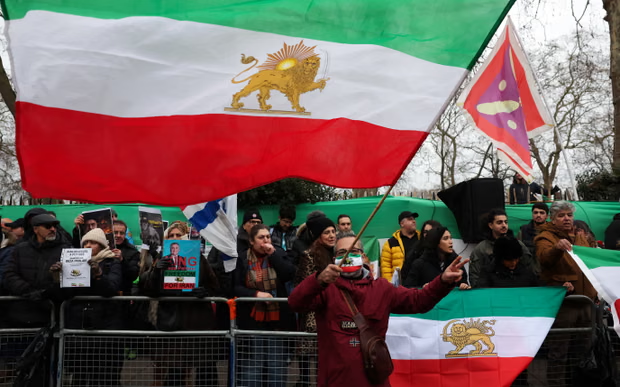
Iran has warned it will respond forcefully to any U.S. military action, as nationwide protests continued to spread despite an intensifying government crackdown that has reportedly left scores dead.
Demonstrations, which began in Tehran over soaring prices, have now reached more than 100 cities and towns across all of Iran’s provinces. Protesters’ demands have widened from economic grievances to calls for the end of clerical rule under Supreme Leader Ayatollah Ali Khamenei.
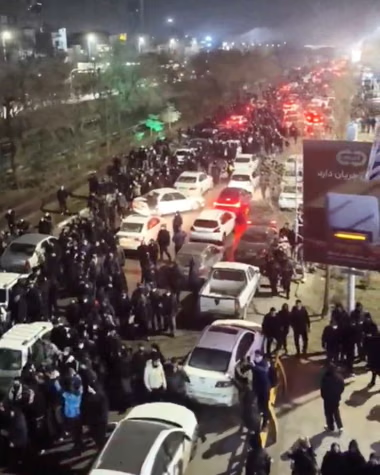
Verified footage and eyewitness accounts indicate security forces have escalated their response. Medical staff at multiple hospitals told the BBC that more than 100 bodies were received over a two-day period, with human rights groups warning the true nationwide death toll is likely far higher. Hospitals in Tehran, Rasht, and other cities have reported being overwhelmed by the injured.
Iranian officials have issued increasingly severe warnings. The country’s attorney general said protesters would be treated as “enemies of God,” a charge that carries the death penalty, while Khamenei dismissed demonstrators as vandals acting at the encouragement of U.S. President Donald Trump.
Washington has sharply condemned the crackdown. Trump said the U.S. “stands ready to help,” describing Iran as “looking at freedom,” though he did not specify what actions might follow. U.S. media reported that Trump has been briefed on potential military options, though officials stressed there is no immediate threat.
Iran’s parliament speaker warned that if the U.S. launched an attack, Israel, along with American military assets and shipping in the region, would be considered legitimate targets. President Masoud Pezeshkian blamed the unrest on the U.S. and Israel, alleging—without evidence—that foreign actors had orchestrated violence and sabotage inside the country.
Footage authenticated by BBC Verify shows security forces firing on crowds in Tehran, Kermanshah, Bushehr, and Ilam. In one incident near Imam Khomeini Hospital in Ilam, videos show gunfire directed toward protesters gathered outside. Other verified clips depict clashes in Mashhad, Iran’s second-largest city, including burning vehicles and heavy gunfire.
Authorities say more than 2,500 people have been arrested since protests began on 28 December. Iran’s police chief confirmed that the level of confrontation had been stepped up, claiming that many deaths were caused by “trained individuals,” not security forces—a claim not independently verified.
Reporting from inside Iran remains extremely limited. The government has imposed a sweeping internet shutdown, restricting even domestic networks. Experts say the blackout is more severe than during the 2022 “Women, Life, Freedom” protests. Limited communication has reportedly been possible via satellite internet, though analysts warn such connections could be monitored.
Meanwhile, Reza Pahlavi, the exiled son of Iran’s last shah, issued a message urging protesters to continue demonstrations while prioritizing safety. He claimed parts of Iran’s security forces were refusing orders, though these assertions could not be independently confirmed.
As unrest continues and international pressure mounts, the situation remains volatile, with rising fears of further bloodshed and a widening confrontation between Iran and the United States.