
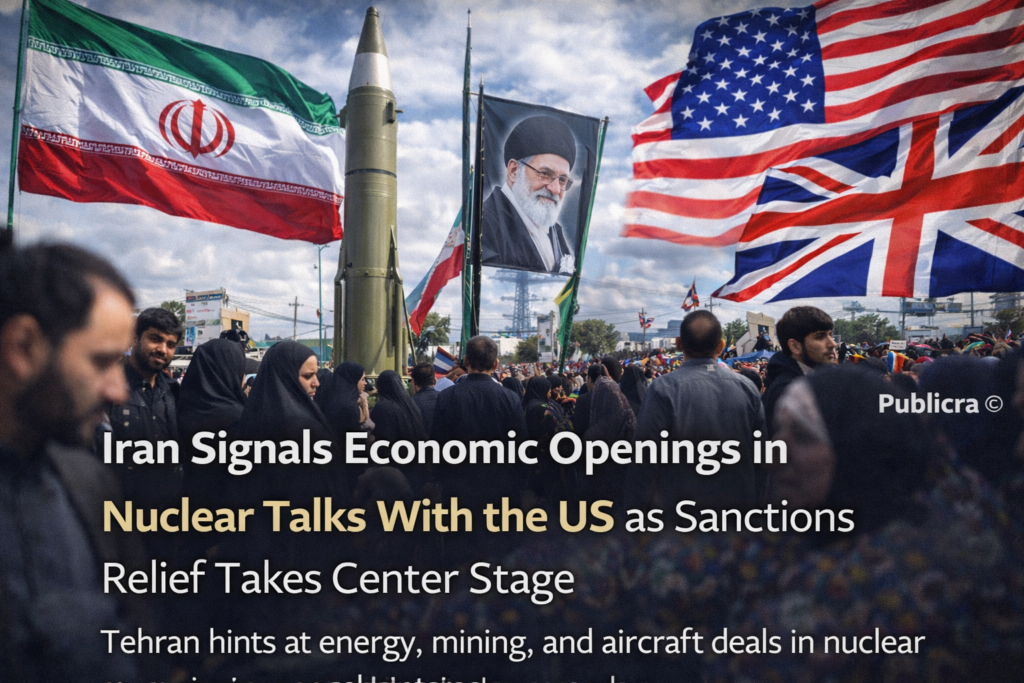
Tehran floats energy, mining, and aircraft cooperation in renewed negotiations, while Washington balances diplomacy with military pressure across the Middle East.
Iran has indicated that a new round of negotiations with the United States could include economic cooperation across energy, mining, and civil aviation, signaling a more pragmatic tone as both sides seek to avoid escalation in a volatile regional climate. The talks, set to resume in Geneva with mediation support, come at a time of heightened military deployments in the Middle East and renewed pressure on Tehran’s oil revenues.
For Washington, the negotiations present an opportunity to constrain Iran’s nuclear activities while averting a broader conflict. For Tehran, sanctions relief remains the core objective—yet officials now emphasize that any durable agreement must also deliver tangible economic benefits for both sides. This framing suggests a shift toward transactional diplomacy: nuclear concessions in exchange not only for sanctions easing, but for pathways to economic normalization that could stabilize Iran’s economy and create mutual incentives for compliance.
Why Economic Incentives Are Back on the Table
Iranian officials have publicly argued that past nuclear agreements failed to anchor U.S. economic interests in a way that would make future policy reversals politically costly in Washington. By placing energy projects, mining investments, and aircraft purchases on the negotiating table, Tehran is signaling that it wants to embed U.S. commercial stakes into any new arrangement.
This approach reflects a strategic calculation: agreements endure longer when they generate constituencies on both sides. Energy cooperation could link American firms to joint field development or technical services. Mining investments could tap Iran’s underdeveloped mineral reserves, while aircraft purchases would address Iran’s aging civil aviation fleet and create manufacturing and maintenance demand. Together, these proposals aim to transform a narrow nuclear deal into a broader economic framework.
The Nuclear Core: Enrichment, Dilution, and Red Lines
At the heart of the negotiations lies the familiar tension over uranium enrichment. Tehran has signaled openness to diluting highly enriched stockpiles and accepting monitoring measures in exchange for sanctions relief. However, Iranian leaders remain firm that zero enrichment is a non-starter, framing domestic enrichment as a matter of sovereignty and technological rights.
Washington’s concern is that enrichment capacity—regardless of declared intent—creates latent weapons potential. Bridging this gap will require creative technical compromises: enrichment caps, export of excess material, extended breakout timelines, and robust verification regimes. The challenge is to design constraints stringent enough to reassure skeptics while politically palatable enough for Iranian leaders to sell at home.
Sanctions Relief: The Economic Lifeline
Sanctions relief is the primary incentive Iran seeks. Years of financial restrictions have constrained oil exports, limited access to international banking, and raised the cost of trade. Tehran argues that without credible, durable sanctions easing, any nuclear concessions would be economically hollow.
Negotiators face a sequencing dilemma: how to phase sanctions relief in tandem with nuclear steps. Front-loaded relief risks weakening leverage; back-loaded relief risks undermining trust. A phased roadmap—tying specific relief tranches to verified milestones—may offer a middle ground. Yet domestic politics in both countries complicate this logic, as opponents of compromise scrutinize every concession.
Energy Cooperation: From Rivalry to Conditional Engagement
Energy sits at the center of Iran’s economic calculus. The country possesses vast hydrocarbon reserves but faces technological and financial constraints due to sanctions. By hinting at joint interests in oil and gas fields, Tehran is inviting a rethinking of energy rivalry into conditional engagement.
For the United States, any energy cooperation would be politically sensitive, particularly amid broader debates over energy security and geopolitical competition. Still, limited technical cooperation—focused on safety, emissions reduction, and infrastructure modernization—could serve as confidence-building measures without fully reopening commercial floodgates.
Mining and Critical Materials: A Strategic Dimension
Beyond hydrocarbons, Iran is positioning its mining sector as an area for potential cooperation. The global race for critical minerals has elevated the strategic value of mining investments. If sanctions were eased, Iran’s mineral resources could attract international capital and expertise, diversifying its economy beyond oil and gas.
For Washington, engagement in mining could align with supply chain resilience goals, though geopolitical and human rights considerations would shape any such cooperation. The inclusion of mining in the talks underscores Tehran’s attempt to broaden the agenda from security constraints to long-term economic integration.
Civil Aviation: Safety, Connectivity, and Symbolism
Iran’s civil aviation sector has long suffered from limited access to modern aircraft and parts. Proposals to include aircraft purchases in negotiations carry practical and symbolic weight. Modern fleets improve safety and connectivity while signaling a normalization of commercial ties.
From Tehran’s perspective, aviation deals are highly visible markers of reintegration into global commerce. For Washington, they offer a way to translate diplomatic progress into tangible benefits for manufacturers and workers—potentially creating domestic stakeholders in sustaining the agreement.
The Military Shadow Over Diplomacy
The diplomatic track unfolds against a backdrop of increased military deployments in the region. The presence of additional naval and air assets signals readiness to respond if talks fail, reinforcing deterrence but also heightening the risk of miscalculation.
This dual-track approach—diplomacy backed by force—aims to strengthen negotiating leverage. However, it also narrows the margin for error. Military incidents, proxy actions, or misunderstandings could derail talks and lock both sides into escalation spirals that diplomacy seeks to avoid.
Regional Implications: Allies, Proxies, and Spillover Risks
Any U.S.–Iran agreement reverberates across the Middle East. Regional partners weigh the impact on their security, influence, and threat perceptions. Some fear that sanctions relief could empower Tehran’s regional activities; others see diplomacy as a stabilizing force that reduces the risk of open conflict.
Proxy dynamics further complicate the picture. Even as negotiations proceed, incidents involving allied groups could trigger retaliatory cycles. Managing these spillover risks requires parallel confidence-building steps and regional dialogue mechanisms that reduce incentives for escalation.
China, Oil Exports, and Economic Leverage
Iran’s oil exports to Asian markets—particularly China—remain a critical revenue stream. Efforts to curtail these exports heighten economic pressure on Tehran, reinforcing the urgency of sanctions relief. At the same time, diversification of buyers and payment mechanisms reflects Iran’s attempt to reduce vulnerability to Western leverage.
For Washington, balancing pressure with inducements is delicate. Excessive economic coercion could harden Iran’s negotiating posture; insufficient pressure could weaken incentives for nuclear concessions. The outcome of the talks will shape how economic tools are deployed in future phases of diplomacy.
Verification and Trust: The Technical Backbone
Any durable agreement will hinge on verification. Monitoring mechanisms must be credible, intrusive, and resilient to political shifts. Technical transparency—access to facilities, real-time data, and independent oversight—builds confidence that commitments are being honored.
Trust remains fragile. Past reversals and mutual accusations have left deep scars. Embedding technical cooperation within a broader economic framework could help stabilize compliance by making backsliding more costly for both sides.
Domestic Politics and Negotiating Space
Negotiators operate within tight domestic constraints. In Washington, lawmakers and public opinion remain divided on engagement with Iran. In Tehran, political factions contest the balance between sovereignty and pragmatism. Successful diplomacy will require leaders to frame compromises as wins for national interests rather than concessions to adversaries.
The inclusion of economic cooperation provides a narrative bridge: nuclear limits in exchange for tangible improvements in livelihoods and connectivity. Whether this narrative holds will depend on the credibility and pace of economic relief.
Scenarios Ahead: Breakthrough, Partial Deal, or Breakdown
Three broad scenarios loom. A comprehensive agreement could trade enrichment constraints for phased sanctions relief and limited economic engagement. A partial deal might freeze the most sensitive nuclear activities while postponing broader normalization. A breakdown could trigger renewed escalation, tightening sanctions, and increased military posturing.
Each scenario carries costs and benefits. Policymakers must weigh the risks of imperfect compromise against the dangers of confrontation. The coming weeks will test whether transactional diplomacy can bridge decades of mistrust.
A Narrow Path Between Pressure and Partnership
Iran’s decision to place energy, mining, and aircraft deals on the table reflects a strategic pivot toward embedding economic incentives within nuclear diplomacy. The approach aims to create mutual stakes that outlast political cycles and reduce the likelihood of abrupt policy reversals.
Yet the path forward remains narrow. Sanctions relief, enrichment limits, verification regimes, and regional security concerns must align in a delicate choreography. If negotiators can convert pressure into partnership—without sacrificing core security objectives—the talks could mark a turning point. If not, the region risks sliding further into confrontation, with economic costs and security consequences that extend far beyond Tehran and Washington.