
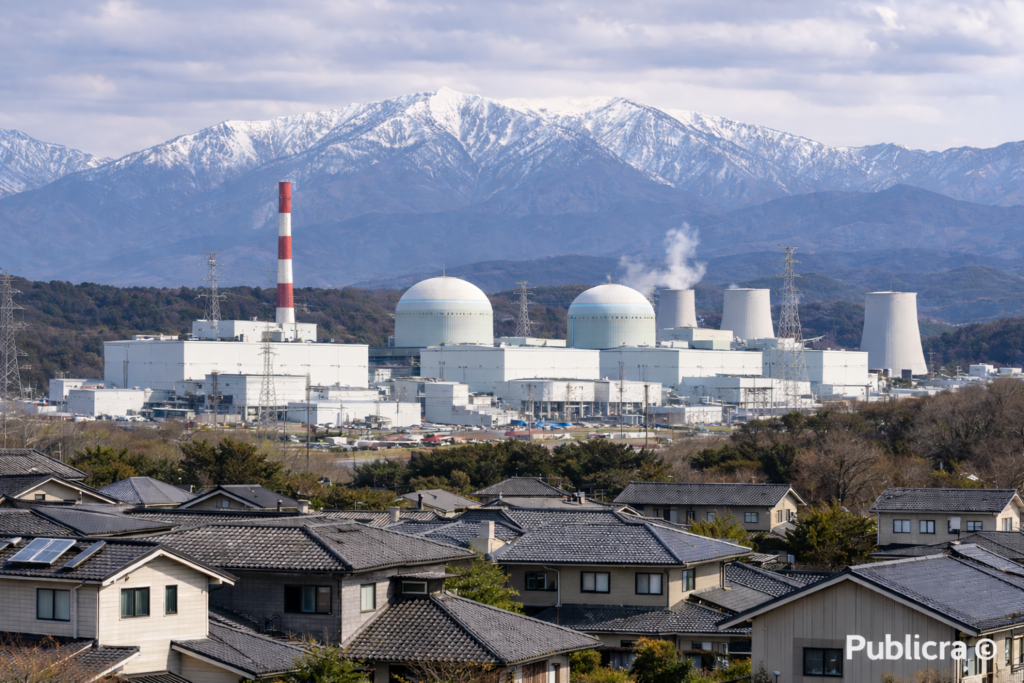
The Kashiwazaki-Kariwa nuclear power plant in Niigata Prefecture, briefly taken offline hours after a historic restart.
Japan’s long-anticipated return to nuclear power faced a fresh setback this week after a technical malfunction forced one of the world’s largest nuclear power plants back offline just hours after it was restarted. The incident highlights the fragile balance Japan is attempting to strike between energy security, public trust, and nuclear safety nearly fifteen years after the Fukushima disaster reshaped the country’s energy policy.
Malfunction Halts Restart Within Hours
Tokyo Electric Power Company (TEPCO) confirmed that an alarm was triggered shortly after midnight on Thursday at Unit 6 of the Kashiwazaki-Kariwa nuclear power plant in Niigata Prefecture. The reactor had been restarted at approximately 7 p.m. the previous evening, marking the end of more than a decade of dormancy following the catastrophic 2011 Fukushima Daiichi nuclear meltdown.
According to TEPCO, the alert occurred while technicians were adjusting the reactor’s control rods, which regulate nuclear reactions inside the reactor core. As the precise cause of the alarm could not be immediately determined, the utility made the decision to shut the unit down as a precautionary measure and begin a detailed inspection.
The company emphasized that there was no release of radiation, no threat to surrounding communities, and no abnormalities detected outside the plant. “Safety remains our top priority,” TEPCO said, adding that the results of the investigation would be disclosed once inspections are completed.
A Symbolic Restart With High Stakes
The Kashiwazaki-Kariwa complex is not just another power station. At full capacity, it is one of the largest nuclear facilities in the world, capable of supplying electricity to millions of households. Its restart was widely viewed as a symbolic turning point in Japan’s energy strategy, signaling renewed confidence in nuclear power as a stable, low-carbon energy source.
Japan’s government has increasingly framed nuclear energy as essential to meeting climate targets, stabilizing electricity prices, and reducing dependence on imported fossil fuels—particularly amid global energy volatility and geopolitical tensions affecting fuel supply chains.
The temporary shutdown, however, underscores the technical and reputational challenges still facing Japan’s nuclear revival.
Public Trust Remains a Major Obstacle
Fifteen years after the Fukushima disaster displaced more than 160,000 residents, public skepticism toward nuclear energy remains deeply rooted—especially toward TEPCO, which operated the Fukushima Daiichi plant at the time of the accident.
A Niigata Prefecture survey conducted in October revealed that nearly 60 percent of residents believed the conditions for restarting Kashiwazaki-Kariwa had not been fully met, while approximately 70 percent expressed concerns over TEPCO’s management and safety culture.
Local opposition has long delayed the plant’s return to service, with multiple layers of approval required from municipal leaders, the prefectural government, and Japan’s independent Nuclear Regulation Authority. The final approval came only after a December vote by the Niigata Prefectural Assembly, followed by endorsement from the governor—making the restart a politically sensitive and closely watched event.
Japan’s Nuclear Comeback: Progress and Limits
Before 2011, Japan operated one of the most extensive nuclear programs in the world, with nuclear power accounting for nearly 30 percent of the nation’s electricity supply. Following Fukushima, all reactors were shut down, and safety regulations were significantly tightened.
As of early 2026, only 15 of Japan’s 33 operable reactors have resumed operation. Lengthy safety reviews, local opposition, legal challenges, and infrastructure upgrades have slowed progress, even as energy costs rise and electricity demand grows.
The brief shutdown at Kashiwazaki-Kariwa does not derail Japan’s nuclear strategy, but it does reinforce the government’s cautious approach and the importance of transparency in rebuilding public confidence.
What Comes Next
TEPCO engineers are now conducting inspections to identify the source of the alarm and verify the integrity of control systems before any attempt to restart the reactor. Regulators are expected to closely monitor the findings, and local authorities will likely demand reassurances before operations resume.
For Japan, the episode serves as a reminder that technical reliability and public trust are inseparable in the post-Fukushima era. Even minor incidents are scrutinized intensely, and any misstep risks reigniting opposition to nuclear power nationwide.
As Japan continues its transition toward a cleaner and more resilient energy mix, the Kashiwazaki-Kariwa plant remains both a cornerstone of that vision—and a test of whether the lessons of the past have truly been learned.