
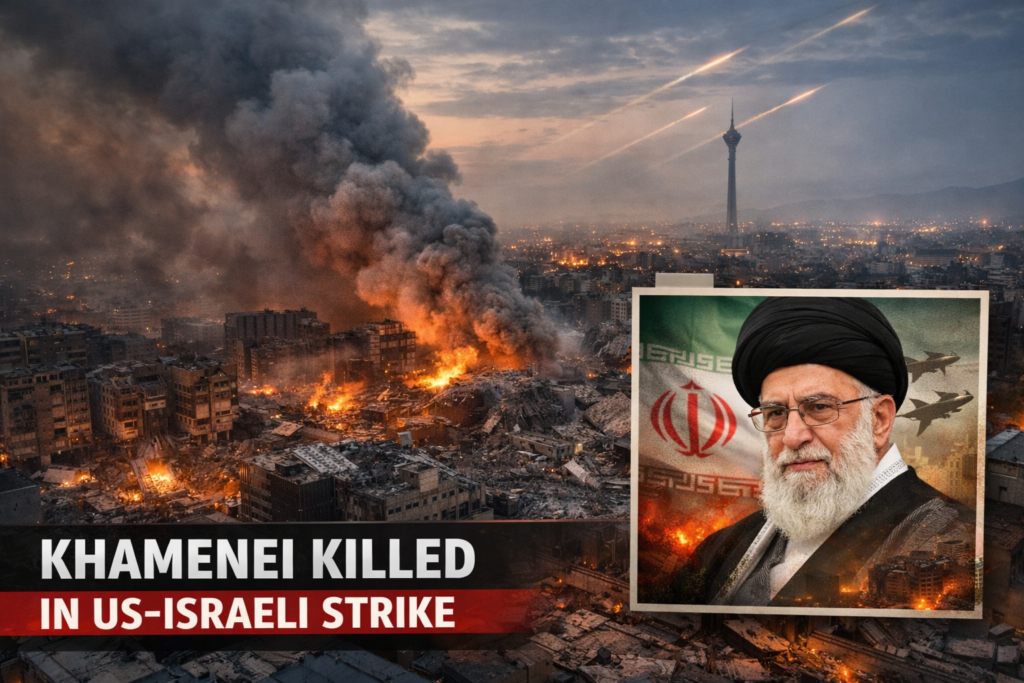
explosive military operation claims life of Iran’s top leader amid escalating Middle East conflict and sparks fears of wider regional war
Middle East Shaken as Iran’s Supreme Leader Is Reported Killed
Iran’s Supreme Leader Ayatollah Ali Khamenei, who led the Islamic Republic since 1989, has been confirmed dead following joint United States and Israeli military strikes across key targets in Iran. Iranian state media and several international outlets report his death has triggered mourning and raised fears of a broader regional war.
This historical moment marks one of the most dramatic escalations in decades of hostility between Iran and Western/Israeli forces. The death of Khamenei — a defining figure in Middle Eastern politics — reverberates around the world, touching geopolitics, energy markets, security alliances, and global diplomacy.
What Happened: The Joint US-Israeli Military Operation
According to reports, the United States and Israel launched coordinated strikes targeting key leadership and military infrastructure in Iran. High-level sources from both nations indicated that the operations were designed to cripple Iran’s strategic capabilities and eliminate top decision-makers allegedly responsible for regional aggression.
The Commanded Strategy
- Multiple strategic sites in Tehran and other cities were struck over a concentrated period.
- Satellite imagery and defense sources suggest extensive damage to structures associated with Iran’s leadership.
- Intelligence officials reportedly identified damage at Khamenei’s compound.
Israeli Prime Minister Benjamin Netanyahu said there are many signs indicating Khamenei “is no longer” alive, a statement that was confirmed later by Iranian state media.
Who Was Ayatollah Ali Khamenei?
Ayatollah Ali Khamenei was a central figure in Iranian governance for more than three decades. As Supreme Leader, he held the ultimate authority over all branches of government, the military, and major domestic and foreign policy decisions. His leadership was characterized by a mix of religious conservatism, political repression of dissent, and steadfast opposition to Western influence in the Middle East.
Khamenei’s rule saw Iran develop intricate regional alliances, support for armed proxy groups across the Middle East, and participation in long-running conflicts that shaped regional dynamics.
Immediate Aftermath and Regional Repercussions
The confirmation of the Supreme Leader’s death has triggered near-immediate consequences:
Iran’s Domestic Response
- Iranian authorities have declared periods of public mourning and official ceremonies.
- There are early reports of internal security operations aimed at stabilizing the political transition.
Retaliation and Military Escalation
Iran has reportedly responded with widespread missile and drone strikes against Israeli territory and United States military bases across the region, including the Gulf and neighboring states.
This cycle of action and retaliation risks drawing in additional regional powers and heightening the possibility of a broader conflict. Analysts say the stakes now extend far beyond bilateral hostilities.
Global Political and Economic Impact
International governments are reacting with concern:
- United Nations and world leaders are calling for calm and restraint as diplomatic efforts intensify.
- Energy markets — particularly oil prices — are volatile amid fears the Strait of Hormuz could become further destabilized.
- Alliances such as NATO and regional security coalitions are monitoring developments closely.
With Iran a major oil producer and a pivot point between global powers, any prolonged conflict could have lasting consequences for world markets and security structures.
What Comes Next: Succession and Uncertainty
The death of a figure as influential as Khamenei raises immediate constitutional and political questions within Iran:
- Who will succeed him as Supreme Leader?
- How will factions within the Islamic Revolutionary Guard Corps (IRGC) respond?
- Will internal pressures for reform or regime change intensify?
These questions loom large as the landscape shifts and new leadership dynamics emerge.